
By Sergio Harding
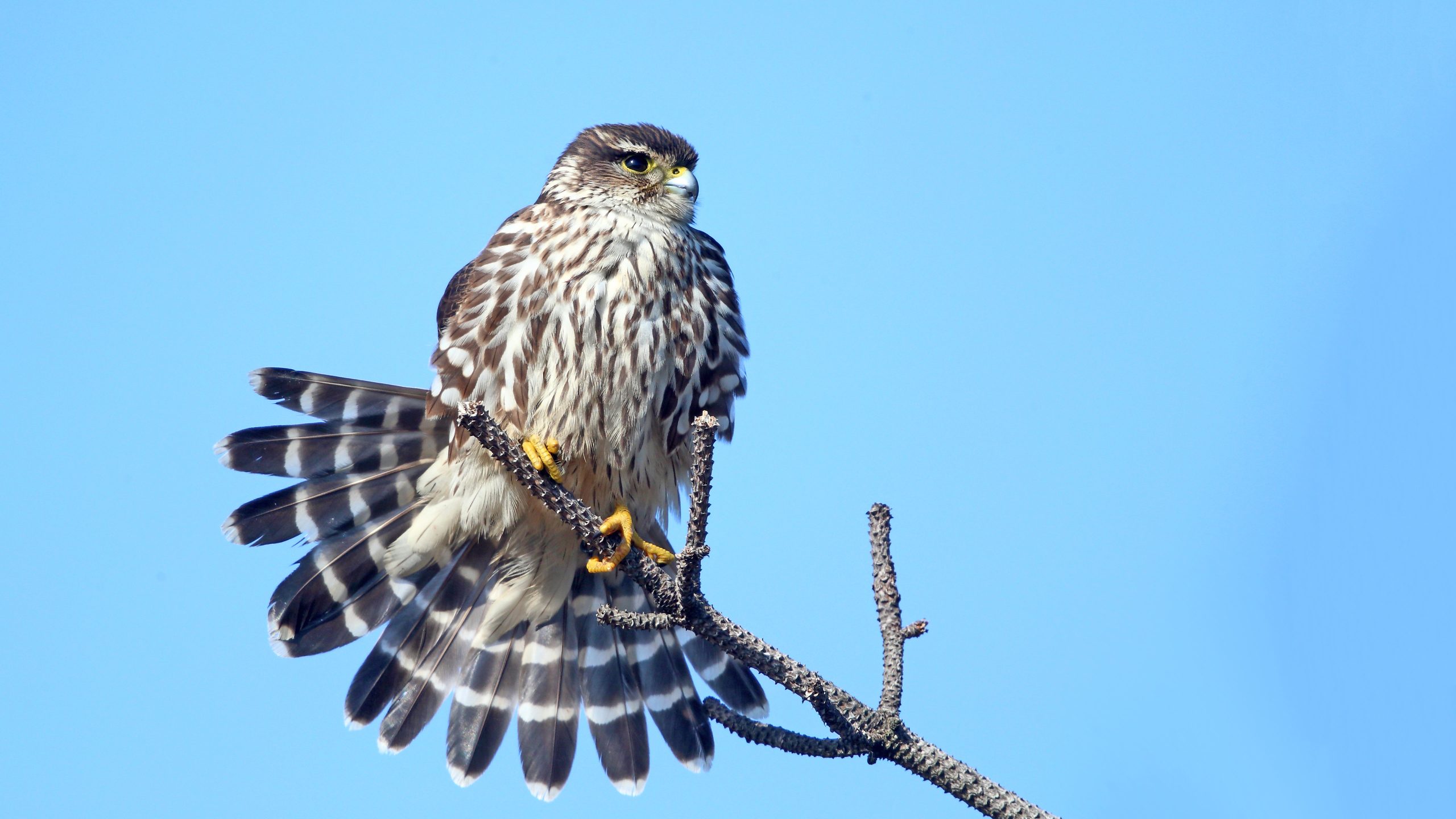
Merlin (photo by Tom Murray)
A major expansion of the Atlas website has launched on Wednesday, August 5, 2026, rounding out Phase One of the site, which went live in October 2025. Phase Two features ten new pages of content covering additional results, methodology and, importantly, conservation.
- Among the many things that makes the Atlas valuable is what it tells us about the status of Virginia’s breeding birds. The Results page has been updated to identify the species that have undergone major expansions and contractions of their footprint on the Virginia landscape over the 30-year period since the First Atlas. Look also for content on Virginia population estimates for breeding bird species, both on the Results page and as a standalone table. A separate phenology table provides date ranges for the different phases of the breeding cycle for nearly 200 species.
- The Contributions to Conservation page comprehensively details how the Atlas can and will continue to be harnessed to work for the conservation of many of our declining bird species. The page is complemented by a Research page that invites researchers to analyze raw data from the Atlas to further heighten its conservation impact. Finally, action-minded Virginians can refer to the How You Can Support Birds page to learn what they can do to benefit the Commonwealth’s breeding birds.
- Using the Education page, K-12 educators can learn how the Atlas website can support their work in the classroom, including fulfilling the requirements of Virginia’s Standards of Learning (SOLs).
- The Virginia Habitats page provides information on the status of different habitats in Virginia and the threats that they face. Along with the Virginia Geography and Climate page, it highlights representative bird species of different habitats and geographic regions of the Commonwealth.
- The Coverage page summarizes survey effort and block completion, and is a testament to the enormous effort that both volunteers and field technicians devoted to collecting data for the Atlas.
- Head to the Analytical Methods page for insight into how the distribution and abundance maps in the Species Accounts were produced, and how changes in species distributions between Atlases were identified.
- Notes from the Field, on the website’s homepage, features curated articles from VDWR that are relevant to bird conservation. It also links to past Atlas articles and will be used for new Atlas-related announcements.
With Phase Two of the Atlas now online, the website is complete. As a living publication, however, it may see future revisions. These could include taxonomic updates reflecting changes in the common and scientific names of individual species, as well as expanded content for individual Species Accounts.
We invite you to explore this new edition of the Atlas website, and, as always, to provide us with feedback via the Contact Us page.
