
Walleye fishing opportunities in Virginia should be plentiful in 2026 to allow anglers a chance at catching this popular fish species.
The collaborative efforts between DWR fisheries biologists and hatchery staff allow for the propagation of Walleye.
Walleye brood stock is typically collected from the New, Staunton, and South Holston Rivers each spring. Collections occur in March to coincide with the spawning runs of each system. Walleye spawned or hatched at Vic Thomas, Front Royal, King and Queen, and Buller Fish Cultural Stations, are raised in fertilized ponds anywhere from 4 to 6 weeks. Walleye fingerlings, reared primarily on a zooplankton diet, will range in size from 1 to 2 inches in length.
Ponds are harvested and Walleye fingerlings are stocked in waters across the Commonwealth. Hatchery production has been variable in the last few years with 1,781,500 Walleye and Saugeye fingerlings stocked into 19 selected waters in 2023. The 2024 production allowed for the stocking of 669,170 Walleye and Saugeye fingerlings into 13 priority waters. The 2025 production allowed for 1,323,227 Walleye and Saugeye fingerlings to be stocked into 18 priority waters. An additional 2,235,874 Walleye and Saugeye fry were stocked into 9 selected waters. The rebound in fingerling abundance was a welcomed sight in 2025 thanks to all the hard work and effort put forth by DWR hatchery staff. Growth rates of stocked Walleye and Saugeye vary by resource with more productive systems seeing fish reach 18” in roughly 2 years
Getting Started
Depending on where you live and how far you are willing to travel, the various stocked Walleye waters will allow anglers to explore new resources they may have overlooked in the past and learn some new fishing techniques along the way. The Walleye stocked waters vary greatly as anglers can decide which systems are the most intriguing. Large rivers such as the New and Shenandoah Rivers can provide a memorable day on the water with an abundance of Walleye and a decent chance of catching larger-sized Walleye. Smaller-sized rivers like the Staunton River should not be overlooked and can provide solid action. For those anglers more comfortable being on the still water, Virginia offers several large reservoirs with quality Walleye and Saugeye fisheries. Numerous small impoundments have also been stocked to provide healthy Walleye and Saugeye populations. This summary forecast will try to point you in the right direction to catch some Walleye and Saugeye in 2026.
Anglers curious about learning additional information on the various fisheries should check out the full 2026 Walleye Fishing Forecast for more detailed information.
Regional Summary
Summary Table of Regional Walleye Fishing Ratings
| Region | Waterbody | Impoundment Size (acres) | Rating |
|---|---|---|---|
| Southwest Virginia | New River | Excellent | |
| Flannagan Reservoir | 1,143 | Excellent | |
| South Holston Lake | 7,580 | Excellent | |
| Hungry Mother Lake | 108 | Good | |
| South Central Virginia | Staunton River | Excellent | |
| Philpott Reservoir | 2,800 | Good | |
| Leesville Lake | 3,400 | Fair | |
| Northern Virginia | Shenandoah River | Good | |
| Lake Anna | 9,600 | Good | |
| Lake Brittle | 77 | Excellent | |
| Burke Lake | 218 | Good | |
| Lake Orange | 124 | Fair | |
| Eastern Virginia | Lake Chesdin | 3,100 | Good |
| Lake Whitehurst | 458 | Good | |
| Little Creek Reservoir | 947 | Fair |
Southwest Virginia
Walleye fishing opportunities in Southwest Virginia are centered around the DWR stocking efforts of the Upper New River, Flannagan Reservoir, South Holston Lake, and Hungry Mother Lake. The Upper New River continues as the best opportunity in Virginia to catch trophy Walleye. Stockings over the last 10 years have led to an increase in catch rates for both anglers and biologists. Past stocking efforts have focused on areas from Allisonia to Buck Dam. Anglers continue to report good catch rates of smaller fish 12–20” and fish greater than 28” in these areas. The 2025 length distribution was similar to 2024 with a high proportion of Walleye in the 13–22” range. This indicated multiple years of good recruitment.
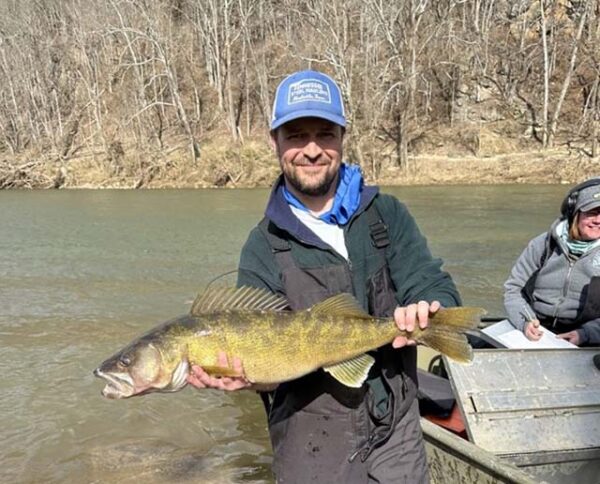
Surveys on the New River revealed an increase in the abundance of Walleye pushing past the 28” mark. These trophy fish will make an angler’s day, and they surely make DWR staff happy as well.
Flannagan Reservoir is another fishery that should be on an angler’s radar in 2026. DWR stockings have consisted of both Walleye and Saugeye fingerlings at this resource and respectable populations should interest anglers. Walleye observed in the 2025 sample ranged from 14–26 inches in length with an average length of 18 inches. Saugeye ranged from 14–22 inches in length with an average length of 17 inches. The most recent survey revealed a large proportion of the Saugeye population should be reaching harvestable size in 2026. The latest results found 49% of collected fish to be of legal size (≥18” min length).
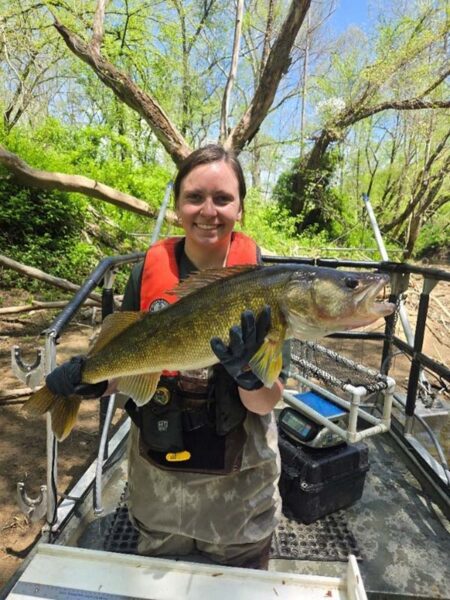 Anglers visiting South Holston Lake in 2025 should experience excellent Walleye fishing as the population continues to improve with more consistent stockings. Sampling during 2025, including both electrofishing and gill netting, revealed a desirable size structure with a high proportion of fish larger than 18 inches. The 2025 electrofishing survey provided a very favorable catch rate of 47 fish/hr. The Walleye growth rate is outstanding, so anglers should find plenty of fish that measure in the 19–23” size range. The survey found a large assemblage of fish in the 15–17” range, so things are looking great for the future.
Hungry Mother Lake is a 108-acre impoundment that provides anglers with a great opportunity to catch Walleye in a small lake setting. The Walleye population is stable or slightly increasing. There are good numbers of fish up to 20 inches and just enough larger ones to cause anglers to lose some sleep this summer. Walleye up to 28 inches in length have been landed in recent years.
South Central Virginia
Walleye fishing opportunities within South Central Virginia can be found in the Staunton River, Philpott Reservoir, and Leesville Lake. These waters are stocked annually with Walleye fingerlings that will eventually provide anglers plenty of opportunities throughout the year.
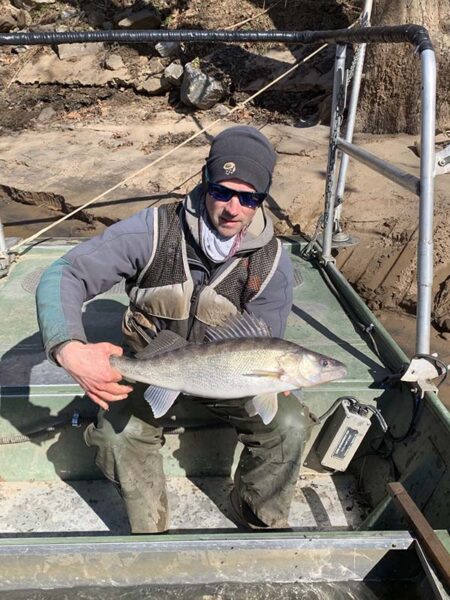
The Staunton River has a strong Walleye population that sees anglers drawn to the action of the spawning run each spring. Walleye fishing in the Staunton River has become a fishery to pay attention to, especially from Leesville dam to Altavista. Quality Walleye are now consistently being caught and sampled all the way to Brookneal. Anglers will be pleasantly surprised by the increased presence of Walleye in the 4-to-6-pound range. Recent stockings within Leesville Lake have been successful, and anglers are reaping the rewards. A portion of the Walleye stocked in Leesville Lake passes through the dam and provides a boost to the fishery within the Staunton River. The strong forage base within Buggs Island Lake assists with the growth rates of fish that migrate down river.
Phillpott Reservoir should be a productive Walleye water in 2026. The 2025 survey revealed a decent catch of fish in the 16-20-inch range with the average size at 18 inches. The survey found that 57% of Walleye collected were 18 inches or longer. Most collected fish were from the recent improvements in stocking abundance that have created beneficial recruitment. Some larger-sized female Walleye were in the mix and created additional excitement.
Leesville Lake provides anglers with another Walleye fishing destination. Recent surveys have shown a strong year class of fish from the 2024 stocking. These fish should be hitting the 18–22” range in 2026. Walleye that remain in Leesville Lake have good growth rates and typically reach 18 inches between ages two and three. A large proportion of the stocked Walleye will make their way to the Staunton River. The 2021 and 2023 year classes were better than average for Leesville Lake and any of those fish that remain in the system should be of quality size for anglers.
Northern Virginia
Walleye fishing opportunities are plentiful within Northern Virginia with waters such as the Shenandoah River, Lake Anna, Lake Brittle, Burke Lake, and Lake Orange providing the action. Walleye can be found in the Shenandoah River from Warren Dam in Front Royal downstream beyond the Virginia/West Virginia State line. Although they are not as numerous in the Shenandoah as they are in other rivers, their population is stable, and the fish are showing good growth rates reaching lengths exceeding 25 inches. Anglers should expect to see quality-sized fish in the 21–22” range with a decent chance of catching a few larger fish greater than 24 inches.
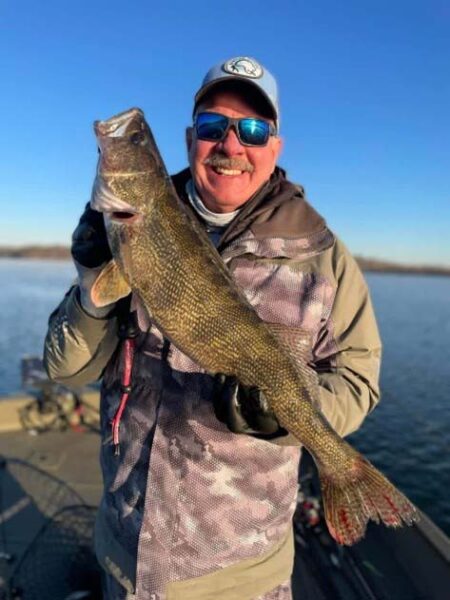
Lake Anna is providing some great Saugeye fishing action. The strong forage base of Lake Anna allows stocked Saugeye to grow very quickly and to impressive weights. The largest Saugeye collected in recent years weighed an impressive 7.25 pounds. Past Saugeye stockings at reduced stocking rates have still yielded positive returns with anglers catching a decent assortment of fish in the 4-to-5-pound range. Although the catch rate of the 2025 survey showed a decline from the 2024 and 2023 surveys, there are still decent fish available for anglers. The average sized Saugeye in 2025 measured 16 inches with fish up to 25 inches in the collection. A more consistent approach to Saugeye stockings going forward should aid in strengthening this up-and-coming fishery.
Lake Brittle has traditionally been a productive small impoundment for Walleye. The recent transition to stocking Saugeye fingerlings, instead of Walleye, has provided positive results that could be attributed to the recruitment of fish from multiple years of higher stocking rates. The average total length of fish collected during 2025 surveys was 15 inches with 19% of the collected fish greater than the 18-inch minimum size limit. A large presence of juvenile fish in the 8-to-12-inch range was observed. The catch rate of 90 Saugeye per hour was quite impressive. Several good year classes of Saugeye will be providing anglers with quality fishing action in the next few years.
Past stockings at Burke Lake in Fairfax County are still yielding quality results with anglers catching Walleye in the 4–7-pound range. The last few years have seen the Walleye stocking allocation transition to Saugeye when readily available from the DWR hatchery system. The 2025 electrofishing surveys encountered an abundance of fish with the collection of 147 Saugeye and 16 Walleye. The abundance of juvenile fish set the average length at 16 inches. The survey found two peaks of distribution centered around fish in the 14–16” range and the 20–23” range. The collection revealed 24% of fish to be of legal length (18”).
Lake Orange also saw a change in stocking from the traditional Walleye to Saugeye stockings. The Saugeye population benefitted from the stocking of 200 fingerlings/acre over several years. Recent electrofishing surveys revealed less than desired catch rates of Saugeye and Region 4 staff have decided to switch stocking efforts from Lake Orange to Lake Anna. The catch rate of Saugeye in 2025 was similar to 2024 with Saugeye average length of 15 inches with a max length of 25 inches. The survey found 17% of collected fish greater than 18” in total length.
Eastern Virginia
Saugeye and Walleye fishing opportunities of Eastern Virginia can be found in Lake Chesdin, the Appomattox River, Lake Whitehurst, and Little Creek Reservoir.
The last seven years of DWR hatchery production has been beneficial for Lake Chesdin. Saugeye fingerlings were stocked into the lake in 2019, 2021, 2022, 2023, and 2025 and Walleye fingerlings were stocked in 2020 and 2024. The strong forage base of Gizzard Shad has yielded trophy-sized Saugeye in the 7-to-7.5-pound range. Anglers should have a decent chance at catching Saugeye in the 4-to-5-pound range. The 2025 survey found a high proportion of fish from the 2023 stocking with some of the larger fish reaching 22 inches.
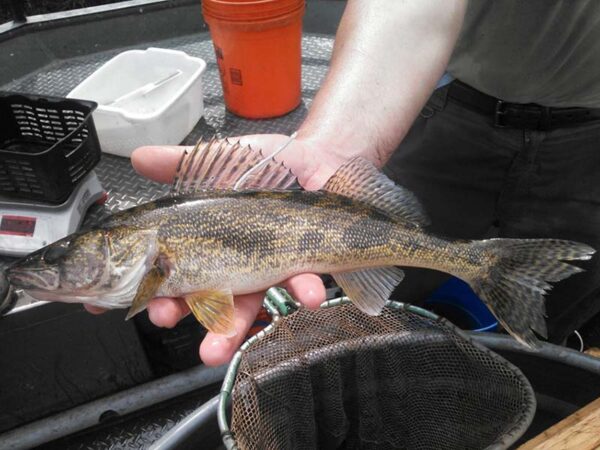
Walleye and Saugeye that escape from Lake Chesdin by passing over or through Brasfield Dam have created a solid fishery in the Appomattox River, with anglers catching a decent abundance of citation-sized fish especially during the spring. Decent action for Saugeye can be found right below Brasfield Dam and all the way down to VSU.
Lake Whitehurst down in the Virginia tidewater has seen increased action for both Walleye and Saugeye after the successful return of the stocking program. This highly productive system typically yields fast growing fish that feed upon juvenile Gizzard Shad and White Perch. The 2025 spring electrofishing survey showed positive results in the collections of numerous Saugeye and from all indications fish are doing quite well.
Little Creek Reservoir in Toano, VA provides some Walleye fishing opportunities and a scenic location to fish. Stockings have varied in rate the last few years. The 100,000 Walleye fingerlings stocked in 2023 should start to provide anglers with some decent action. The stocking of 77,000 Saugeye fingerlings in 2025 will be of interest to anglers in a few years.