
Lake Arrowhead Biologist Report 2025
On May 19, 2025 department biologists and technicians conducted spring sampling using boat electrofishing gear. Biologists use boat electrofishing gear to collect the fish and time their sampling effort. As a result biologists can track the number of fish per hour of electrofishing or catch per unit of effort (CPUE). The CPUE as well as other metrics like growth and mortality are then monitored periodically to determine the overall health of the fish population. Four permanent sites are sampled every 3-5 years. Our sites cover a majority of the shoreline habitat circumnavigating the lake. In total, 343 fish were collected during the sample, representing 7 gamefish species (Largemouth Bass, Black Crappie, Bluegill Sunfish, Redear Sunfish, Yellow Bullhead, Northern Pike and Yellow Perch).
Largemouth Bass
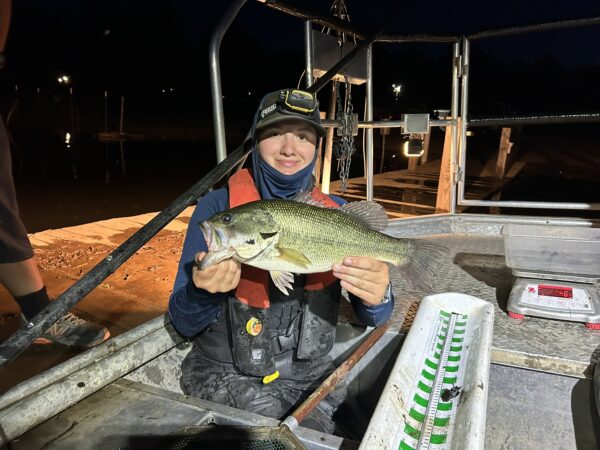
The Largemouth population is incredibly consistent at Lake Arrowhead. A total of 266 bass were netted at a catch rate of 354 fish per hour. This was the second highest catch rate going back to 1999 (Figure 1). Their sizes ranged from 3-18″ in length with a majority of the catchable sized bass measuring 8-12″ inches in length (Figure 2). However, there are quite a few quality sized bass patrolling the shallows. 82% of the bass captured are considered adults or stock sized fish (>8”), within that group 33.3% are considered quality sized largemouth (>12”) and 1.4% were >15″. The 2025 sample didn’t contain quite as high of a catch rate of quality bass compared to previous samples. Biologists feel that they might have been a week or two late when sampling. Many of the bass were males and at the tail end of the spawn. Missing the larger female bass deflates the catch rate of quality fish. This year’s sample of 97 quality bass per hour falls just below the long-term average. Regardless, anglers should expect high catch rates.
Going forward, anglers should continue to see consistent catch rates as the bass population has experienced consistent spawning success for many years (Figure 3). When young bass recruit on a regular basis, the fishery remains stable. Allowing reasonable amounts of aquatic vegetation to grow as well as adding artificial structures like Christmas trees provides excellent nursery habitat for all species of young fish. Biologists plan to deploy 100 trees at various locations within the lake early in 2026.
Sunfish
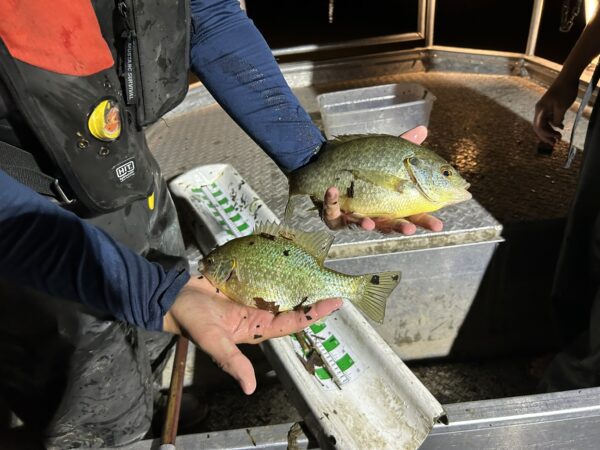
Lake Arrowhead is home to a variety of sunfish species including Bluegill Sunfish, Redear Sunfish, and Green Sunfish. The sunfish population looks very good and is considered balanced (Figure 4). The two dominant species are Bluegill (BLG) and Redear Sunfish (RDE) and they ranged in size from 3-10 inches in length. Overall, sunfish catch rates are strong, we captured 68 BLG per hour and 176 RDE per hour. Anglers interested in harvesting fish for the frying pan should target the sunfish at Lake Arrowhead. 51% of the Bluegill exceeded 6” in length while 93% of the Redear topped that length. Anglers will be hard pressed to find a better sunfish fishery in the valley. Try casting near our fish habitat structures scattered throughout the lake. A map of the fish habitat structures is located under the “Fishing” tab on the Lake Arrowhead web page at dwr.virginia.gov.
Channel Catfish
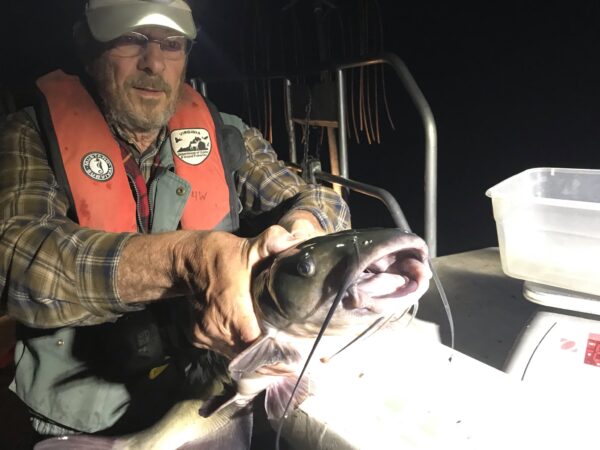
Channel catfish are stocked annually by the Department and Lake Arrowhead provides anglers with a great opportunity to catch a tasty meal. In the fall of 2025, 269 ten-inch channel cats were stocked into the lake. Surprisingly biologists didn’t capture any catfish during their sample, however anglers have been reporting excellent catch rates the past few years. Catfish anglers should use cut bait, nightcrawlers, or commercial catfish baits to entice them into biting. Catfish spawn in June / July and often use the artificial spawning boxes placed by biologists to help boost the population with natural reproduction. Targeting the openings of the boxes during the spawn can be a productive way to catch these sassy queens. Look for boxes in 3-6 feet of water along the west bank of the lake.
Yellow Perch
An uncommon species for the valley, the yellow perch provides a nice change of pace for any angler that visits the lake. The catch rate of perch was low and the perch range in length from 4-8 inches. Anglers interested in harvesting fish should give perch a try.
Northern Pike
Northern Pike are stocked periodically to provide diversity to the fishery as well as a challenging trophy fish for anglers to target. A few Pike are caught each year typically in early spring or during the winter. Their sizes range 20-30”. In the spring 75 northern pike fingerlings were stocked into Lake Frederick. One Pike was captured during sampling.
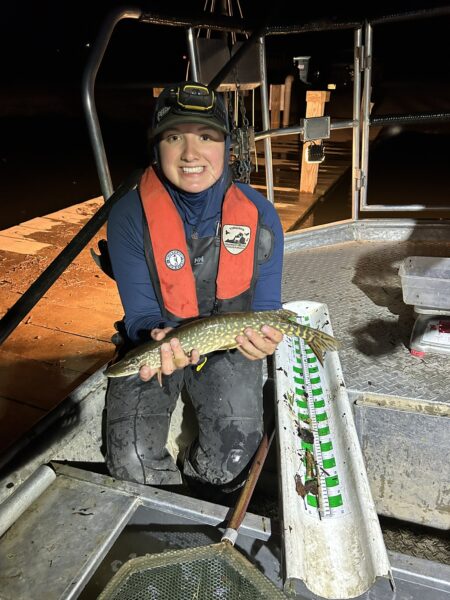
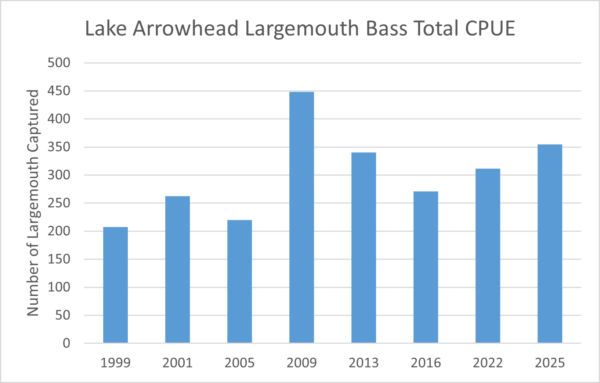
Figure 1: Annual catch of Largemouth Bass from 1999-2025 in Lake Arrowhead.
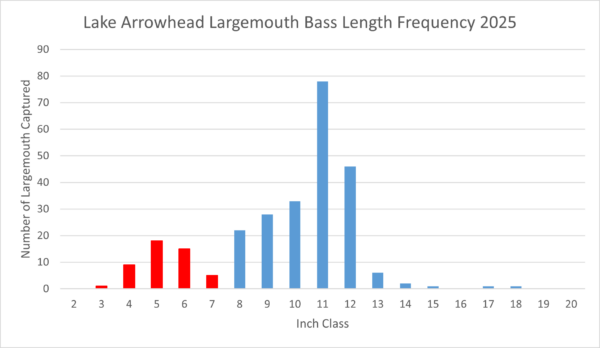
Figure 2: Number and lengths of Largemouth Bass collected at Lake Arrowhead in Spring of 2025. Juvenile bass (less than 8 inches) are represented with red bars, while adult bass are shown with blue bars.
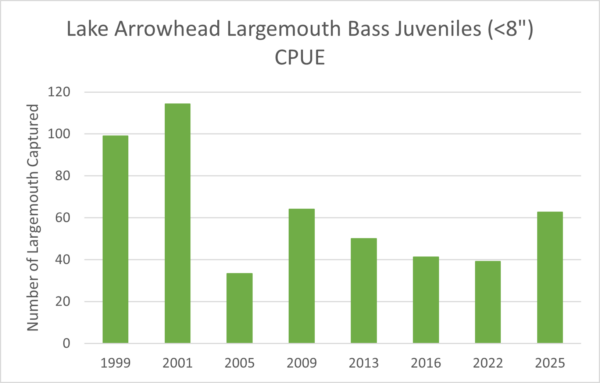
Figure 3: Annual catch of juvenile bass <8 inches from 1999-2025 in Lake Arrowhead.
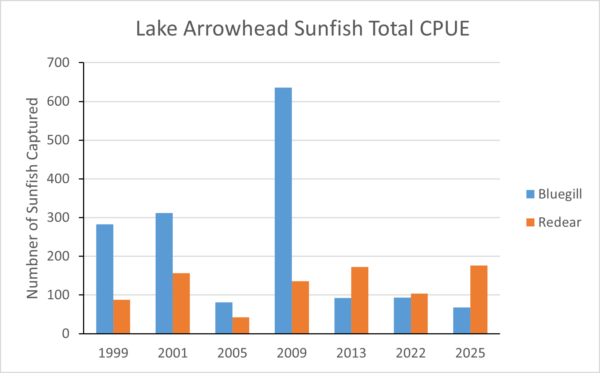
Figure 4: Annual catch of Bluegill and Redear Sunfish from 1999-2025 in Lake Arrowhead