
South Fork Shenandoah Biologist Report 2025
During the fall of 2025, department biologists and technicians sampled the South Fork Shenandoah using boat electrofishing equipment. Nine permanent sites are sampled annually. The sites are evenly spread throughout the river, three are located in the upper river (Port Republic to Shenandoah Dam), three in the mid river (Shenandoah Dam to Luray Dam), and three in the lower river (Luray Dam to Warren Dam).
Smallmouth Bass
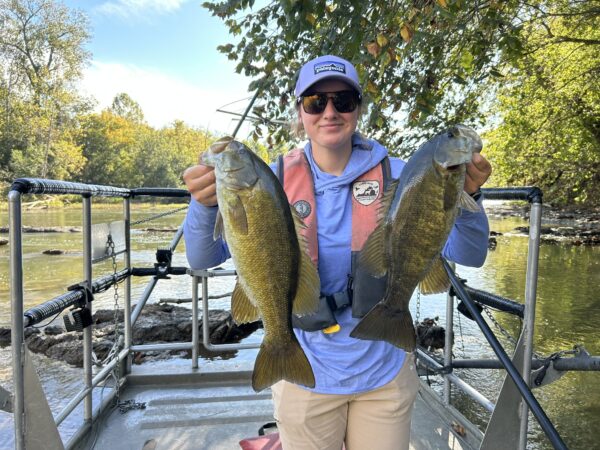
The South Fork Shenandoah River is known by anglers as a “numbers” fishery, meaning anglers can expect to catch a reasonable number of bass and sunfish on any given day. During our 2025 fall sampling we collected 602 Smallmouth Bass from nine sample sites at a rate of 72 fish per hour (Figure 1). Approximately 31% were 11” or greater, 10% topped 14” and 3% measured 17” and up. Our catch rate dipped slightly compared to the ’23 and ’24 sample and is below the long term average. Despite the recent dip in catch rate, the population looks favorable, with good numbers of quality fish. Overall, our sample yielded high numbers of 8-11” smallmouth, with a solid number of quality sized fish (> 11”). Although the overall catch rate has declined, fish exceeding 11” have remained consistent going back to 2008. Our current catch rates would improve if we experienced an above average spawn in 2026. For the past three years we have had very low spawning success due to extreme weather conditions (Figure 2) . Smallmouth juveniles have a hard time recruiting to the population when we have extreme high water during the spawn in spring, and / or extreme drought during the summer. Hopefully we will have more favorable weather in the coming year to help boost the population. Three years straight of poor spawning success is extremely rare for the South Fork. Anglers will no doubt notice a dip in catch rate over the coming years as a result.
During the spring biologists and hatchery staff raised fingerling smallmouth bass at the Front Royal Fish Cultural Station. This effort is part of a long-term smallmouth bass stocking project. A 16km study site was selected ranging from Newport dam to the Whitehouse boat landing. In 2025, 6,700 fingerling smallmouth were stocked and spread between 6 sites. Hopefully survival will be high and help bolster the poor year class experienced in 2025.
The South Fork has had its fair share of struggles over the years with fish health problems, but by in large the fishing on the Shenandoah should be good in 2026.
Largemouth Bass
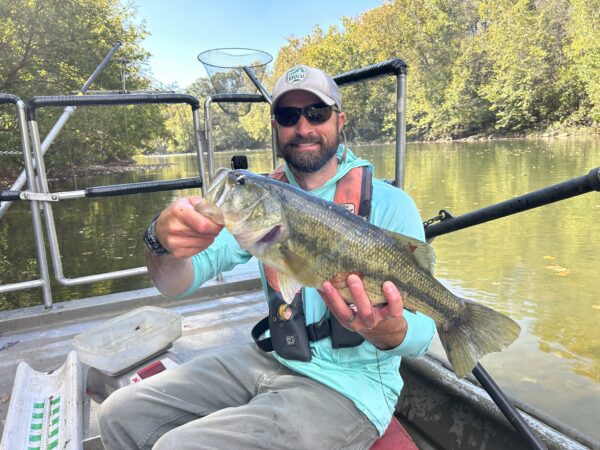
Largemouth Bass also present excellent opportunities for anglers, as this river harbors a quality population. Finding 2 to 4 pound fish should not be difficult in deeper, slower sections when woody debris are targeted. Overall, 64.1% of our sample contained quality sized fish (>12”) with a majority falling into the 8-16” size range. The Shenandoah River is a sleeper largemouth fishery for quality bass. Although there has been a reduction in overall numbers of largemouth, anglers should notice a slight increase in 2026 (Figure 3). Both overall numbers as well as quality fish have increased compared to the 2024 sample.
Muskellunge
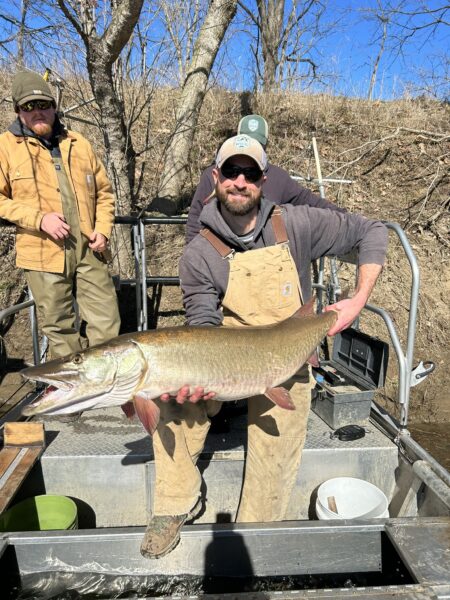
There is also the opportunity to catch Musky in the longer and deeper pools. VDWR periodically stocks fingerling-size musky in the South Fork Shenandoah River at 15 sites stretching from Port Republic to Front Royal. It was last stocked in 2024 with 2,983 fingerling musky (approximately 3-4”). There has been limited evidence of muskies reproducing naturally in the South Fork, therefore they must be stocked to sustain a fishery. Musky are stocked to add diversity to the fishery and provide a challenging trophy fish for anglers to target. However, biologists are currently very happy with the current population, so no muskies were stocked in the summer of 2025. Adult musky densities are not as high as some of the other rivers in the state due to the lack of consistent pool habitats. However, when you come across a pool on the South Fork, anglers have a good opportunity to encounter one. Each winter our biologists and technicians sample the river specifically for musky. They sample 4 sites using three electrofishing boats. During the last sampling event in early 2025 they collected a total of 68 fish at a rate of 6.4 fish per hour, with a majority falling in the 33 – 42” range. After a few down years, consistent stocking has had a positive impact on the population. Anglers can expect a higher than average number of musky in 2026 with a slight increase in the number of fish in the 40”+ class. Musky grow fast in Virginia, with females reaching citation size (40”) in 5-6 years.
To learn how to fish for musky, please visit: dwr.virginia.gov/wildlife/fish/muskellunge/
Sunfish
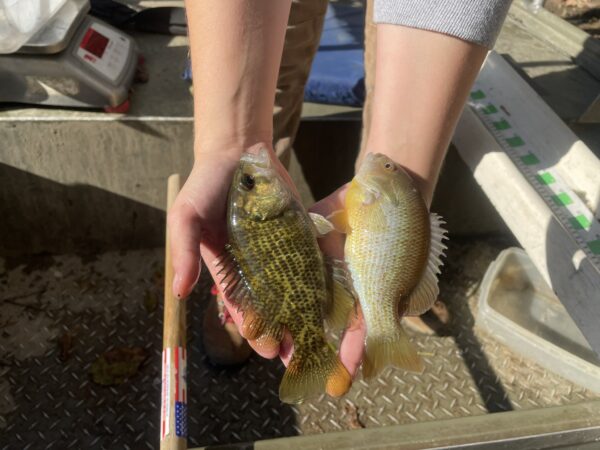
Another success story for the Shenandoah is the Sunfish population, specifically the Redbreast Sunfish. After a seven-year downturn in the population from 2014-2020, the population has rebounded nicely (Figure 4). For the past three years we have observed catch rates running above the long-term average, with 26% of our catch measuring >6” in length. Our catch was the highest ever recorded since we started sampling the South Fork, so anglers should have no trouble hooking high numbers of panfish. This is most likely a result of the decline of their main predator, the smallmouth bass. Sunfish anglers should take advantage during this population surge.
Channel Catfish in the 2 to 6 pound range are common, and anglers should concentrate on the lower South Fork when targeting them. Biologists sampled three sites this summer and captured 60 Channel Cats at a rate of 69.5 fish per hour. Seventeen percent of the catch measured >24”, while 3% exceeded 28” in length. This is typical for the South Fork. Anglers hunting for larger Channel Cats should choose the South Fork over the Main Stem or the North Fork Shenandoah. Unfortunately, biologists also collected Flathead Catfish below the Newport Dam. This is not the first time this has occurred, but it is the first time that spawning has been documented. As the flathead population expands it could have detrimental impacts on both native species and sportfish alike. Time will tell.
Don’t be surprised if you catch quality-sized Rock Bass, Pumpkinseed, Bluegill, Green Sunfish, Fallfish, or Black Crappie.
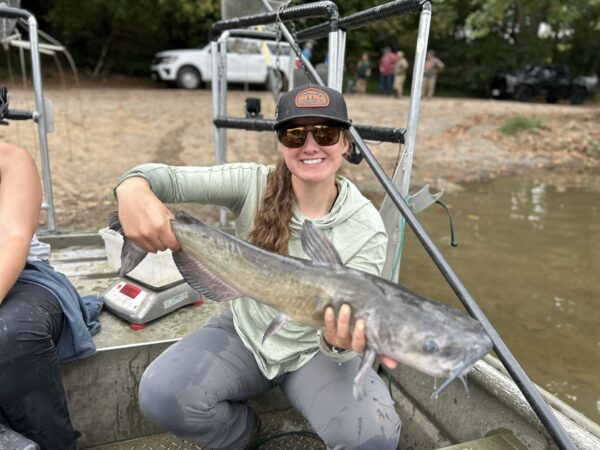
A quality Channel Catfish from the lower reaches of the South Fork Shenandoah River
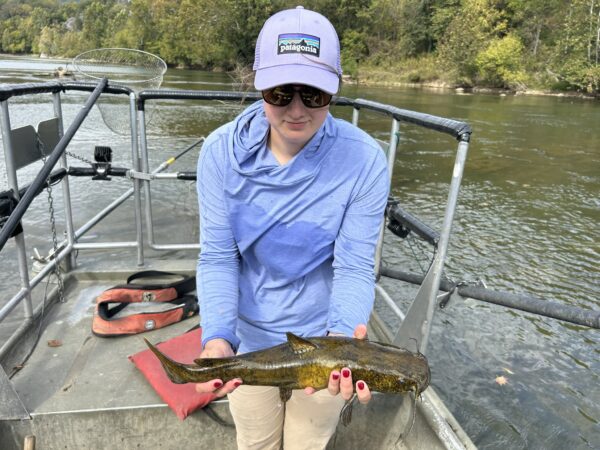
Flathead Catfish captured downstream of the Newport Landing
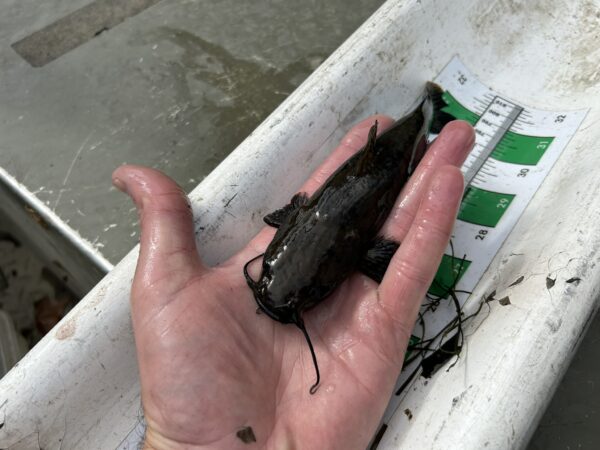
Juvenile Flathead Catfish captured upstream of the Whitehouse Landing.
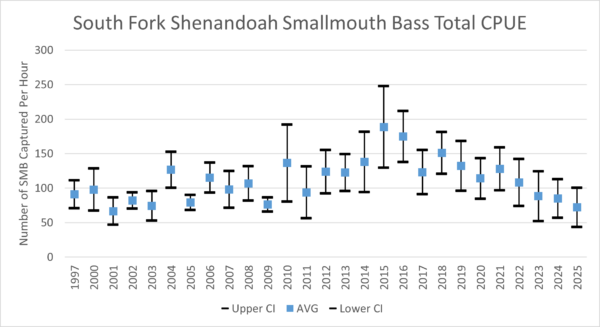
Figure 1
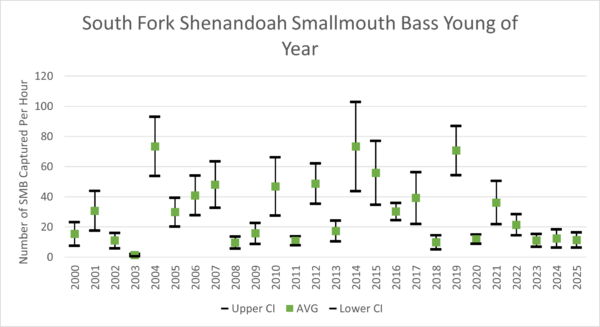
Figure 2
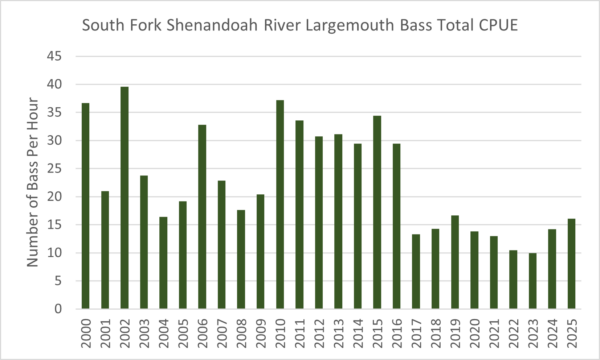
Figure 3
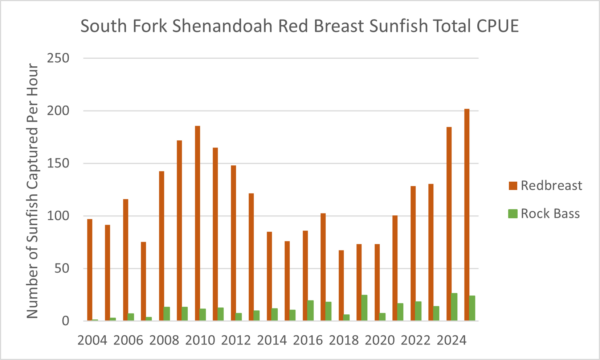
Figure 4