
By Molly Kirk/DWR
Did you know that Virginia’s waters are home to a unique strain of walleye? Lots of people think they have to get on a plane to more northern states to catch these toothy fish, but they can be caught all over Virginia as well. And revenues from Virginia fishing licenses have helped DWR Aquatics biologists and hatchery staff bring the native Eastern Highland strain of the species back to strength in the New and Clinch rivers.
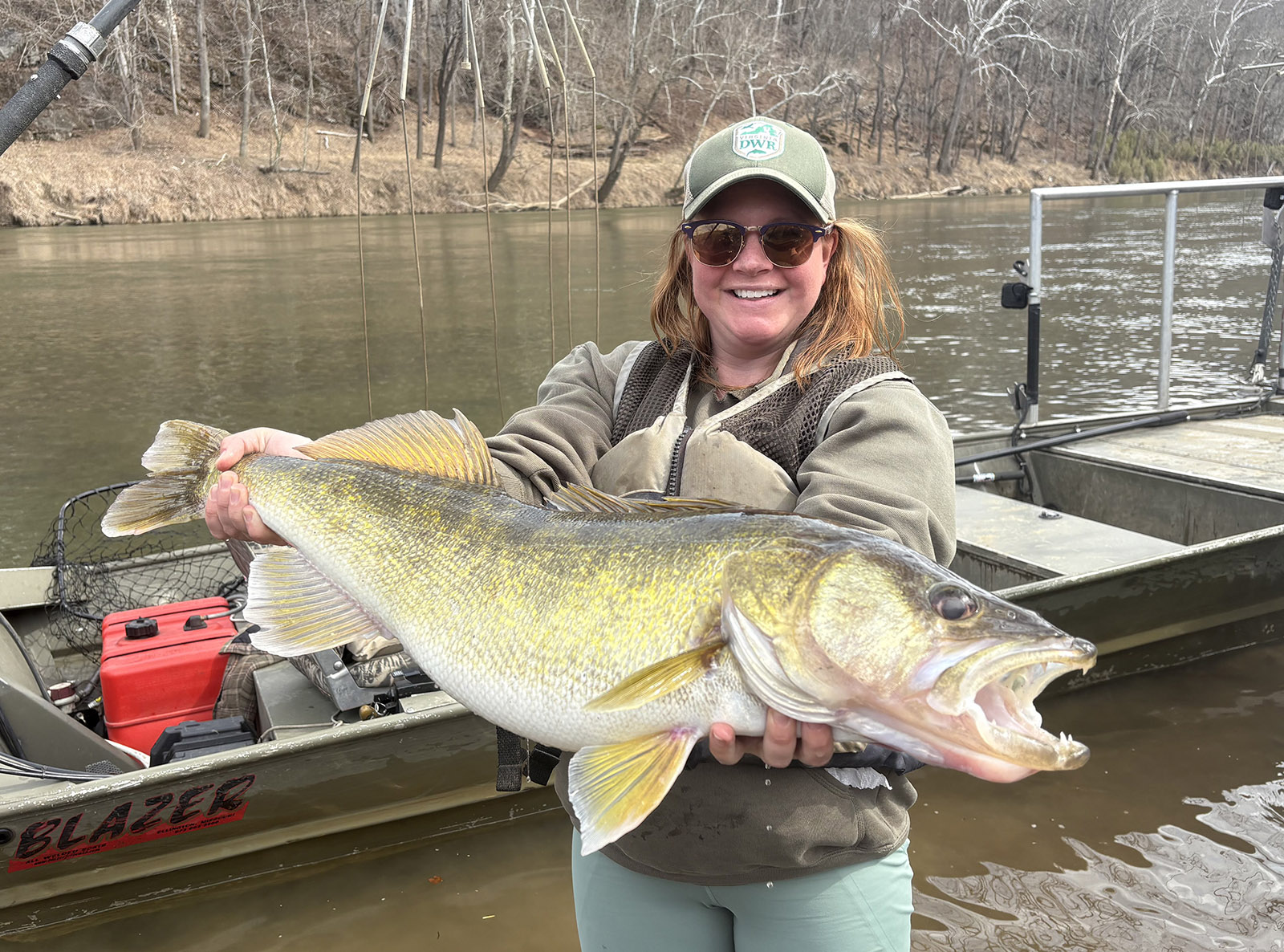
DWR Aquatics Biologist Kristen Chestnut-Faull holding a large New River walleye. Lauren Cheeks/DWR Photo
Early stocking efforts for walleye in Virginia in the 1950s and ‘60s used fish from Lake Erie, Minnesota, and other areas that host the Great Lakes-strain walleye, introducing that genetic line into Virginia’s waters. Biologists initially thought the native Eastern Highland strain had disappeared due to interbreeding between the strains. But genetic testing in the ‘80s revealed that there were still some native Eastern Highland walleye swimming. In the ‘90s, DWR biologists got funding to continue DNA testing. The research revealed not only that there was an Eastern Highland strain population of walleye in the Upper New River, but also that those fish tended to grow bigger than Great Lakes-strain fish and have unique characteristics. As a result, in 2000 DWR developed a walleye management plan for the New River that included hatchery propagation and stocking of Eastern Highland-strain walleye.
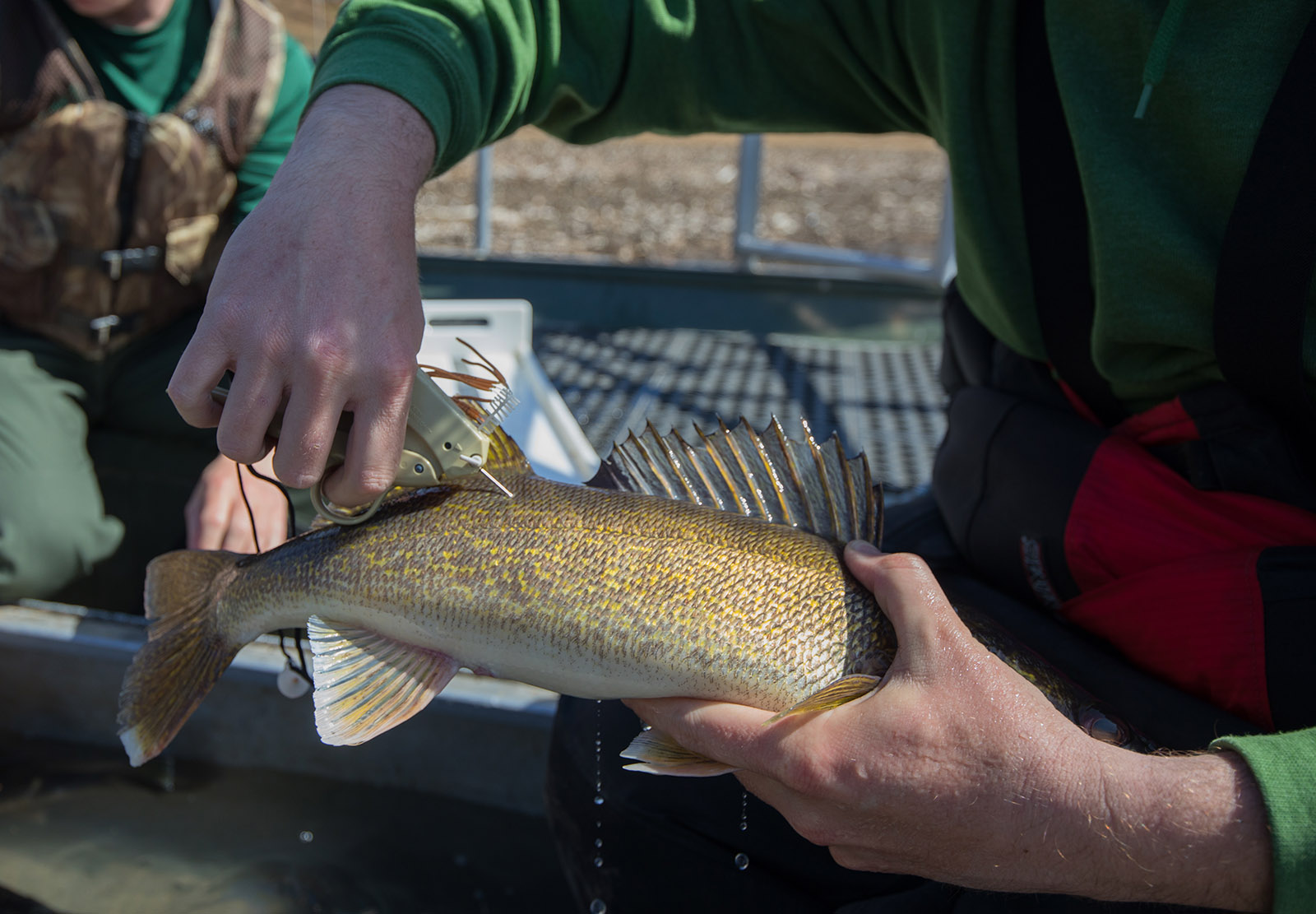
Tagging a captured walleye. This fish will be returned to the river and its motions will be recorded, providing biologists with information about spawning behavior. Meghan Marchetti/DWR Photo
You can read more about the Eastern Highland strain of walleye in Virginia in the September/October 2026 issue of Virginia Wildlife magazine.
Since 2000, DWR has stocked more than two million native walleye into the New River. In the summer of 2026, 86,360 fingerlings were released. DWR biologists have expanded their Eastern Highland-strain stocking activities into the Clinch River and are planning to continue the project in the Powell River. It’s an effort that was made possible in part by fishing license purchases that helped fund DWR’s research, hatchery, and stocking work. A 2011 study also indicated that the enhanced walleye fishery on the New River has resulted in increases in catch rates, angler effort, and angler spending.
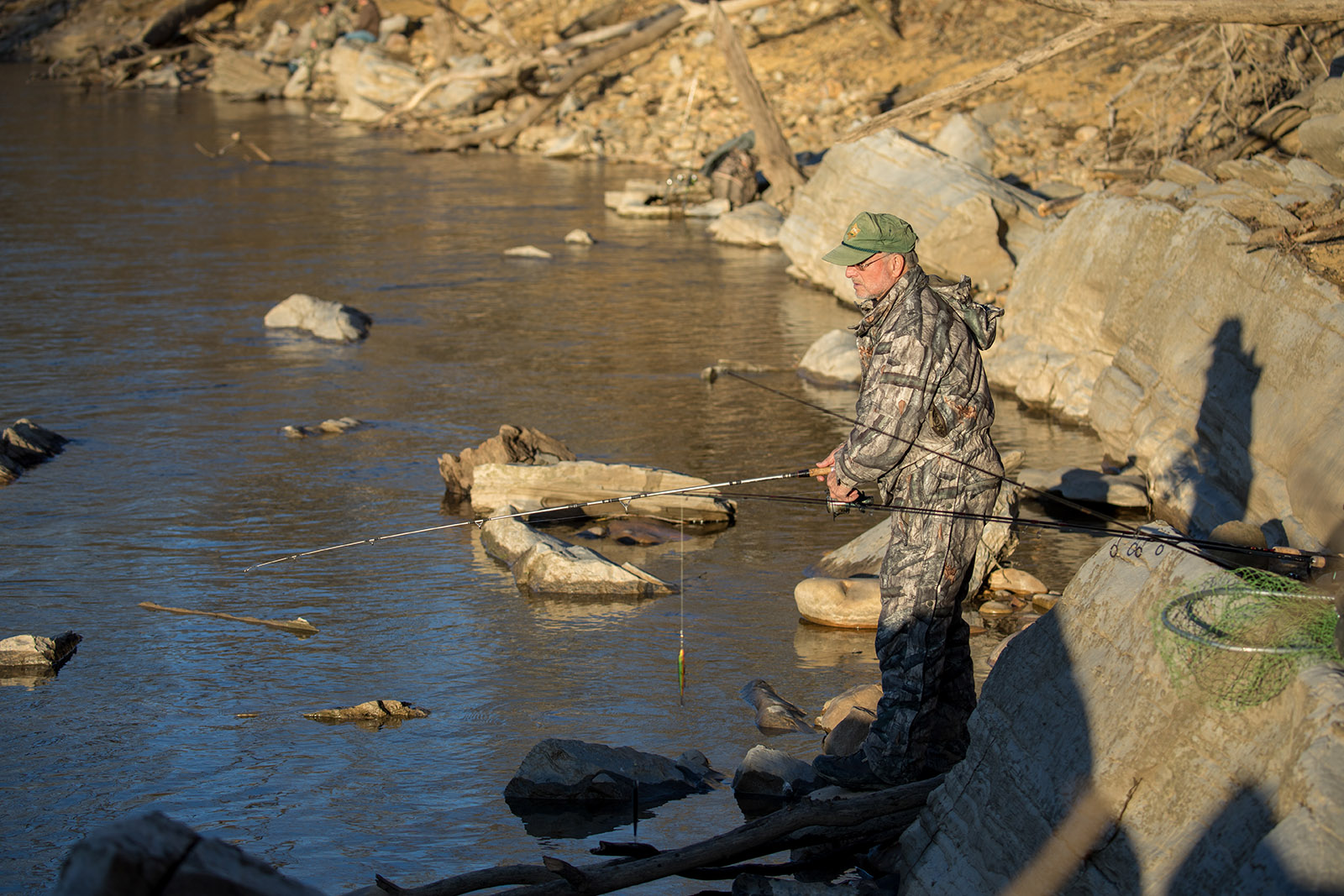
An angler fishing for walleye. Meghan Marchetti/DWR Photo
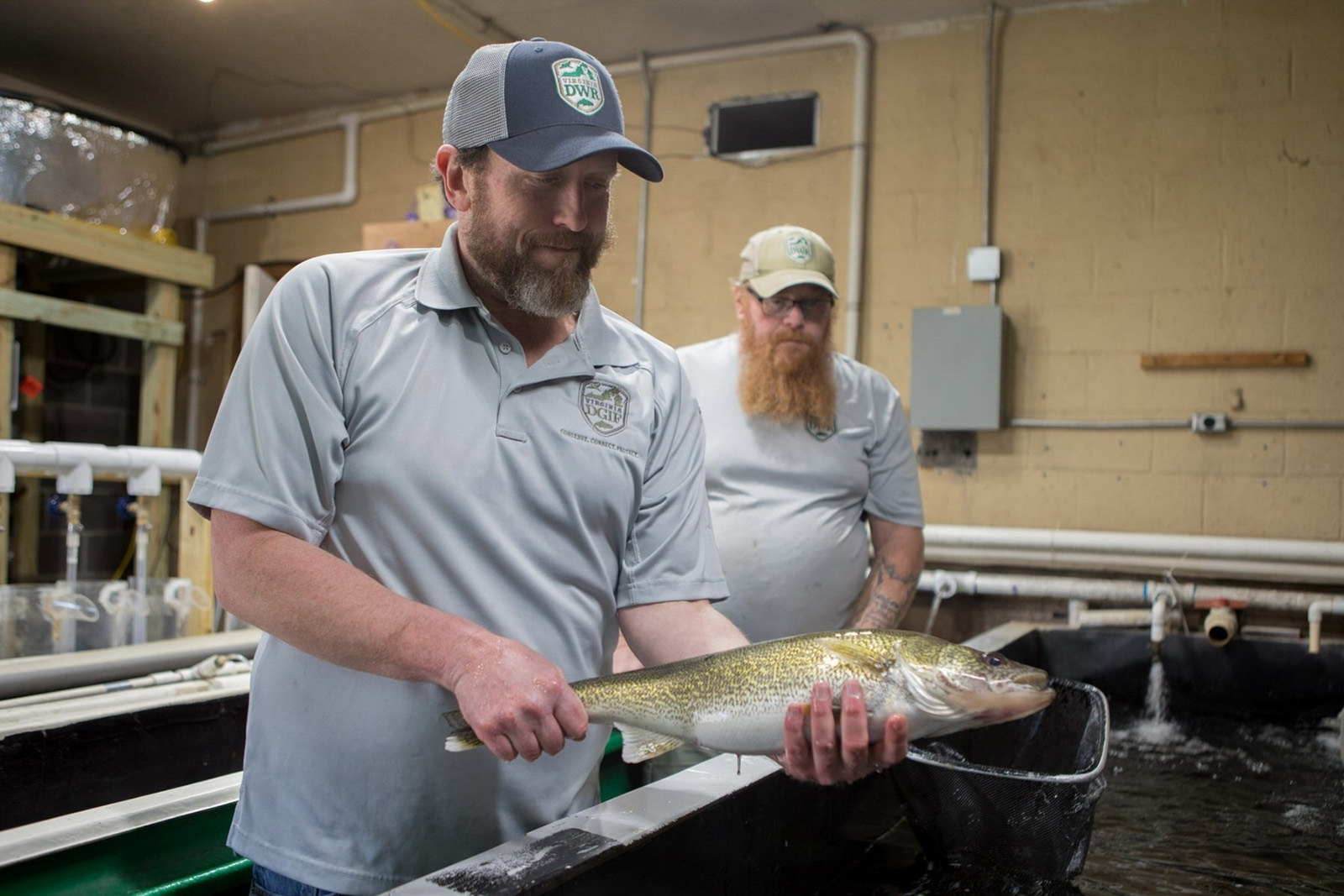
Walleye are propagated and raised at DWR hatcheries. Meghan Marchetti/DWR Photo
It’s all part of DWR’s larger walleye and saugeye propagation and stocking effort, which put millions of walleye into Virginia waters each year. Walleye brood stock is typically collected from the New, Staunton, and South Holston rivers each spring. Collections occur in March to coincide with the spawning runs of each system. Walleye spawned or hatched at Vic Thomas, Front Royal, King and Queen, and Buller Fish Cultural Stations are raised in fertilized ponds for anywhere from four to six weeks. Walleye fingerlings, reared primarily on a zooplankton diet, will range in size from one to two inches in length.
The hatchery ponds are harvested and walleye fingerlings are stocked in waters across the Commonwealth. In 2025, hatchery production allowed for 1,323,227 walleye and saugeye fingerlings to be stocked into 18 priority waters. An additional 2,235,874 walleye and saugeye fry were stocked into nine selected waters. Growth rates of stocked walleye and saugeye vary in waterbodies, with more productive systems seeing fish reach 18 inches in roughly two years.
According to the Walleye Fishing Forecast, put together by DWR Aquatics biologists annually, it’s a good time to get on the water to hook one of these unique fish. And know that when you buy your fishing license, purchase a few lures, and put fuel in your boat, you’re contributing to DWR’s future work on these fisheries.
