
Week One in Review
5/4/26: It’s been roughly one week since the RVA Falcon chicks hatched with the oldest chick being 11 days old and the youngest being six days old. Due to the age and size discrepancy between chicks, we’ve been closely monitoring feeding activity at the nest box and have been logging every meal delivered to the brood, whether or not the youngest chick received food, and if so, how many bites it was given. Although the chick did not receive any food on hatch day, it has been fed every day since and is developing as we would expect. And while the older chicks are often fed first at meal time due to their larger size and better ability to get the attention of their parents, we often see the younger chick fed a substantial amount of food after the other three have had their fill. There are a plethora of prey items around Richmond and as such supplying each of the offspring with the food it needs to continue developing does not seem to be a problem for the adults. This striking difference in age and size between the chicks further demonstrates how much peregrine falcons grow in the first few weeks of life.
What to expect in the coming days?
The chicks will continue to grow and are also in the process of developing a second coat of down, which will be followed shortly by the first tail and wing feathers breaking the skin. In addition to feather development, we also expect to see their muscles strengthen as they get better at sitting upright without falling over and coordinating on food pass-offs with their parents. At the moment, they are still being brooded regularly by the female to help maintain their body temperature, but this behavior will likely stop soon as well.
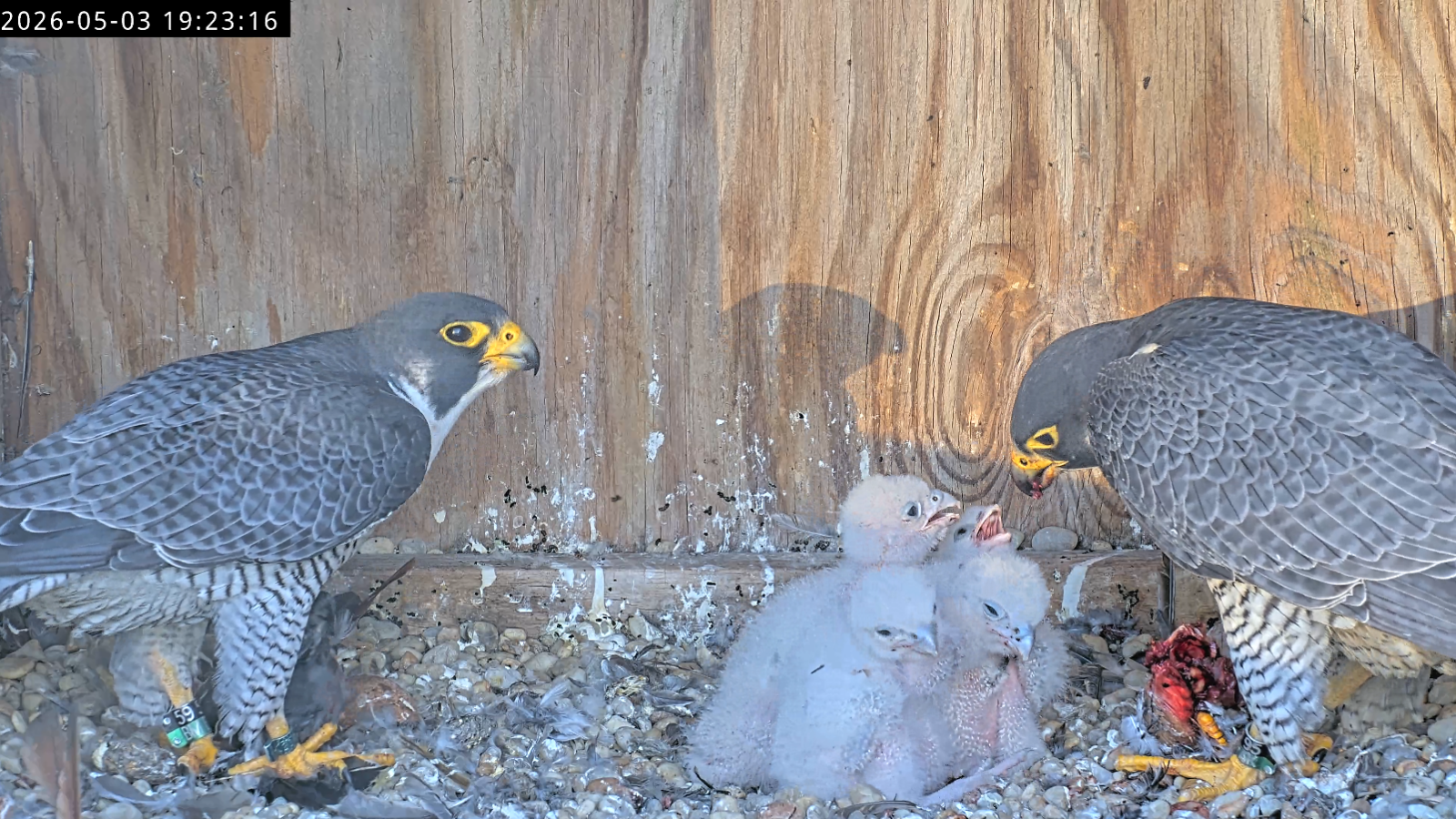
Both adults in the nest box with the chicks. The male (left) has a fresh prey item in his talons, while the female (right) is in the process of feeding out a different prey item to the chicks.