
Description
This large suburban park is aptly named because it’s centered on three lakes, each with its own personality.
The 6,500 sq. ft. nature center is a good starting point for any wildlife watcher. A 50,000 gallon in-ground aquarium showcases some of the aquatic residents found in the lakes. Interactive exhibits and displays teach visitors about the native plants and animals. From the observation platform on the lake edge, herons and other waders can be seen hunting the shallows for small fish and amphibians. This is also an excellent venue to study dragonflies, damselflies, and turtles.
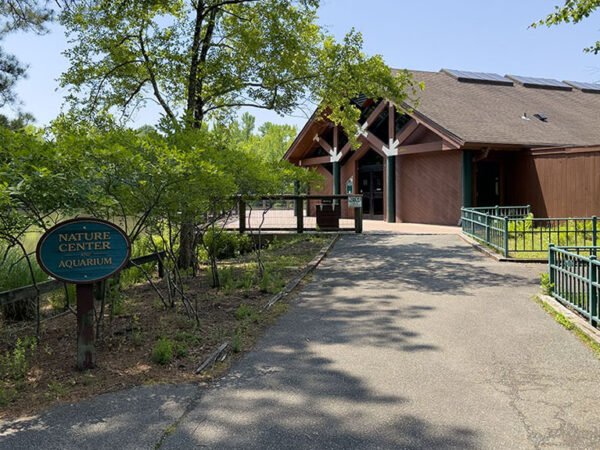
Check the park website for the nature center’s hours. The unique deck is built over the lake so it offers a panoramic view. Turtles are especially numerous here. Photo Credit: Lisa Mease/DWR
An extensive trail system originates near the nature center and meanders through a variety of habitats including swamps, upland forests, open fields, meadows, and riparian woodlands. In wooded areas, listen for Downy, Red-bellied, and Pileated woodpeckers, Carolina Chickadees, Pine Warblers, Tufted Titmice, and Barred Owls any time of year. Red-eyed Vireos, Yellow-throated Warblers, Blue-gray Gnatcatchers, and Great Crested Flycatchers are just some of summer residents. Migration brings many warblers like Black-throated Blue, Prairie, and Palm.
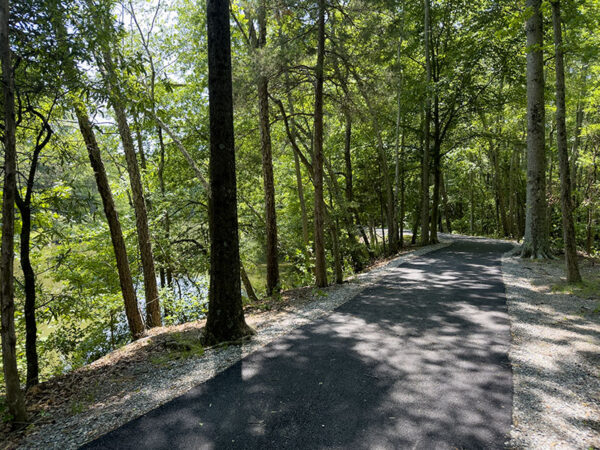
Many of the trails are paved so Three Lakes is ideal for accessible wildlife watching. Photo Credit: Lisa Mease/DWR
Three Lakes Park also has a successful Prothonotary Warbler nest box program. These darting flashes of vibrant yellow are habitat specialists, requiring forest swamps with stagnant or slow-moving water and nesting cavities, unlike every other species that breeds in Virginia.
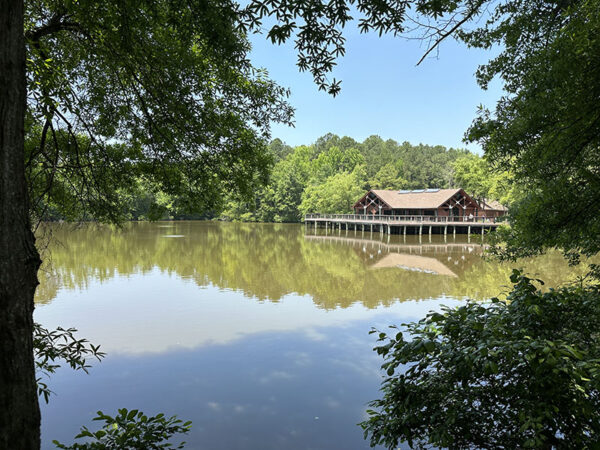
Trees and shrubs encircling the lakes are where to look for Prothonotary Warblers. Photo Credit: Lisa Mease/DWR
Mowed fields, pavilions, playgrounds, and natural surface forest trails are in the northern half of Three Lakes Park. Eastern Bluebirds, Chipping Sparrows, American Robins, and Northern Mockingbirds favor the open grass while the woods are preferred by warblers, vireos, and tanagers.
Wildlife Sightings

145 species have been reported at this site to date.
Birds Recently Seen at Three Lakes Park and Nature Center:
- Bald Eagle
- Canada Goose
- Double-crested Cormorant
- Black Vulture
- Turkey Vulture
- Red-shouldered Hawk
- Eastern Phoebe
- Blue Jay
- American Crow
- Fish Crow
Recent Checklists:
| Date | # of Species | Submitted By |
|---|---|---|
| 17 Apr 2026 | 1 | Ewa Greene |
| 16 Apr 2026 | 21 | Kristine Helsper |
| 15 Apr 2026 | 22 | Ewa Greene |
| 15 Apr 2026 | 1 | Ewa Greene |
| 13 Apr 2026 | 20 | Ewa Greene |
Amenities & Accessibility
Amenities
- On-site Parking
- Restrooms
- Birdability Report Available
Other Amenities: Bike Trails, Hiking Trails, Interpretive Program/Events, Visitor/Nature Center
Accessibility Considerations

This location has a Birdability Site Review available
Learn more about Birdability’s efforts to map accessible outdoor spaces
Maps & Directions
Physical Address: 400 Sausiluta Drive, Henrico, VA 23227
From I-95 North in Richmond, take exit 82 for US-301 North/ VA-2 North, turn left onto US-301 North/ VA-2 North/ Chamberlayne Rd., turn right onto Wilkinson Rd, turn right onto Sausiluta Dr, and follow it to the parking area.
Site Information
Managed By:
- Henrico County
Access Requirements:
- Free, Daily
Contact Information:
- Phone: 804-652-1471
- Email: ThreeLakesEmail@henrico.gov
- Visit Website
Sites, or portions of sites, can be closed periodically for management activities. Please always check the site’s website for additional information prior to visiting.