

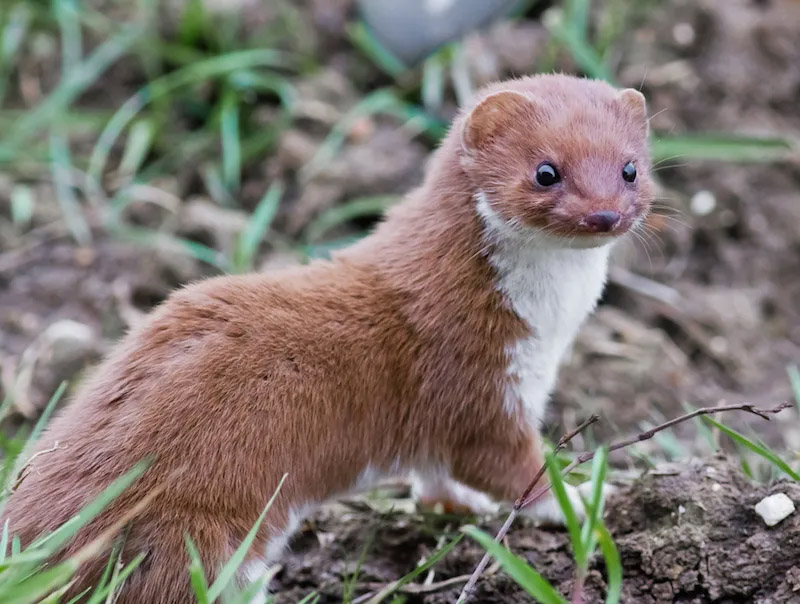
Least Weasel roaming in a field. Photo by ©Cliff Watkinson
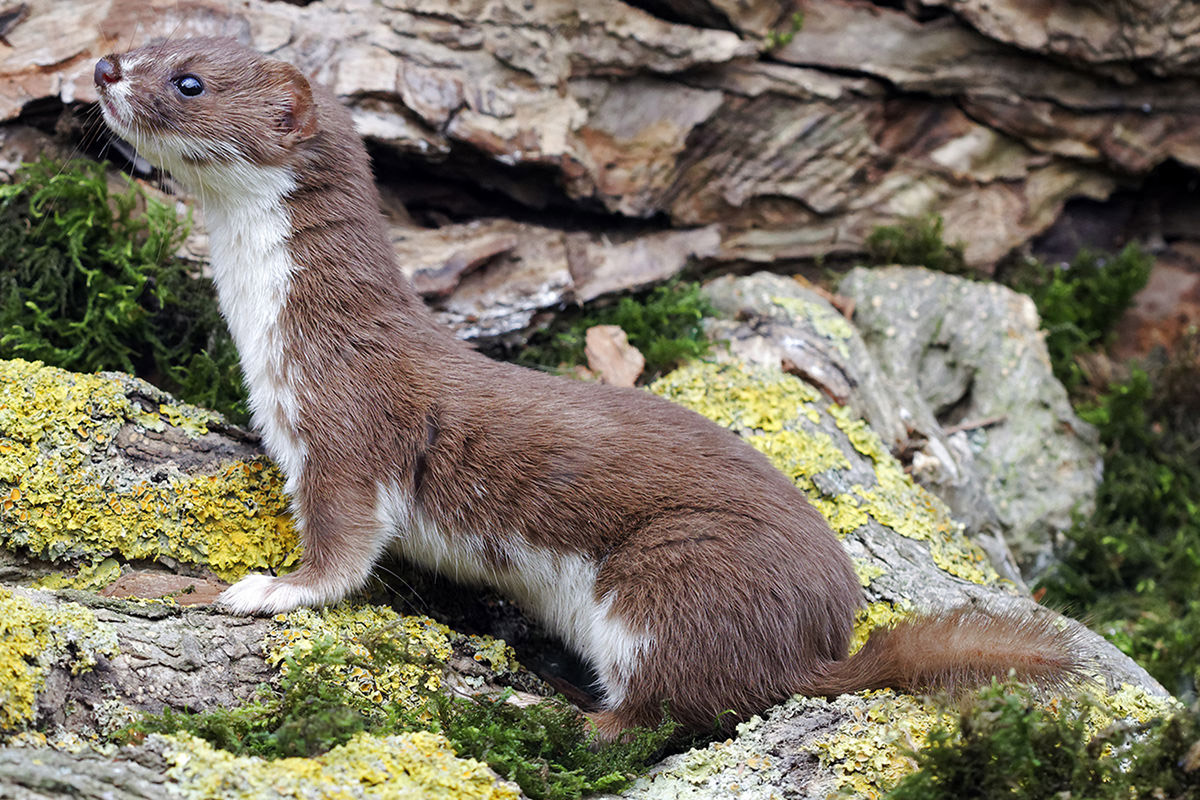
A Least Weasel perched on a rock outcrop. Photo by ©Mike Lane
Fact File
Scientific Name: Mustela nivalis allegheniensis
Classification: Mammalia, Order Carnivora, Family Mustelidae
Size: Adult Least Weasels can attain lengths of 6.5 to 8.6 inches and weigh between 0.9 to 2.3 ounces
Life Span: Up to 2 years in the wild
Distribution
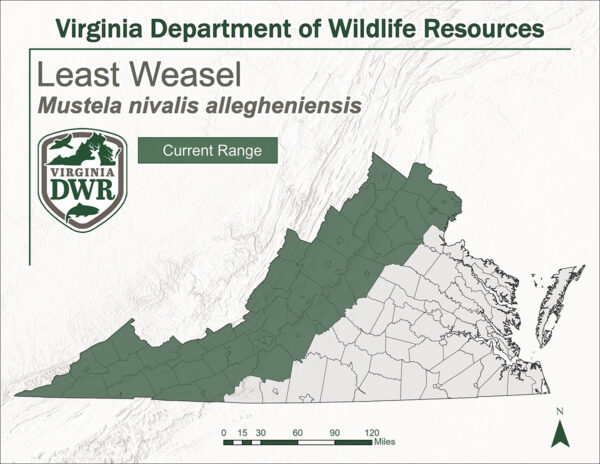
The Least Weasel can be found from Alaska and Canada south to the Midwest, and south in the Appalachian Mountains to Tennessee and North Carolina. In Virginia, the least weasel is native throughout the western portion of the state, with the Blue Ridge generally defining the eastern edge of its range.
Identifying Characteristics
- Virginia’s smallest carnivore, smaller than a chipmunk
- Slender body with short legs
- Short tail measuring about a quarter of their body length
- Dark brown fur on top and sides
- White underside, including the chin, throat, chest, and belly
- Individuals in the northern extent of range molt and grow an all-white coat for the winter, but in Virginia, weasels typically keep their brown coat year-round
- Males (34-64 grams) can attain slightly larger size than females
Habitat and Behavior
The Least Weasel can be found in many types of habitats, ranging from old fields and hedgerows to a variety of forests. Least Weasels are primarily active at night. Unlike most Mustelids which can keep fertilized embryos dormant for several months, there is no delayed implantation strategy for Least Weasels. However, they have more litters per year (2-3) and more young per litter (3-10) than any other American weasel species. Least Weasels seldom travel far, and build underground nests lined with grasses, mouse fur, bones and feathers. They are solitary but also vocal and will chirp when disturbed, hiss when threatened, squeal if in pain and emit a trill during social interactions. Common predators of the Least Weasel include owls, snakes, and house cats.
Diet
Least Weasels are voracious feeders. Their most common prey item is the Meadow Vole, but they also take other voles, mice, shrews, insects and small birds as opportunities are presented. Diet is heavily influenced by habitat at the individual level. Due to their high metabolism, Least Weasels require up to 40% of their body weight in food daily, and need a constant supply of drinking water.
Have you seen a Least Weasel in Virginia? DWR is seeking your report!
Due to their small size and secretive nature, Least Weasel populations can be difficult to monitor. The Virginia Department of Wildlife Resources is actively seeking reports of Least Weasels from within the Commonwealth. If you have any verifiable information (i.e., photos, video, etc.) regarding the occurrence of Least Weasels in Virginia, please enter your information using Virginia DWR’s Rare Animal Observation Form by tapping here.
Last updated: April 29, 2026
The Virginia Department of Wildlife Resources Species Profile Database serves as a repository of information for Virginia’s fish and wildlife species. The database is managed and curated by the Wildlife Information and Environmental Services (WIES) program. Species profile data, distribution information, and photography is generated by the Virginia Department of Wildlife Resources, State and Federal agencies, Collection Permittees, and other trusted partners. This product is not suitable for legal, engineering, or surveying use. The Virginia Department of Wildlife Resources does not accept responsibility for any missing data, inaccuracies, or other errors which may exist. In accordance with the terms of service for this product, you agree to this disclaimer.