
Fact File
Scientific Name: Myocastor coypus
Classification: Mammal
Identifying Characteristics
Nutria are large, invasive, semi-aquatic rodents. Covered with fur, rat-tailed, and web-footed, they’re similar in appearance to the native muskrat, although much bigger and far more destructive. With their large orange, beaver-like teeth, nutria will eat just about every plant that grows in a marsh. Once established, they are capable of mowing down and digging every available acre of beautiful wetland landscapes, thus turning them into bare patches of mud that then become eroded to open water over time.
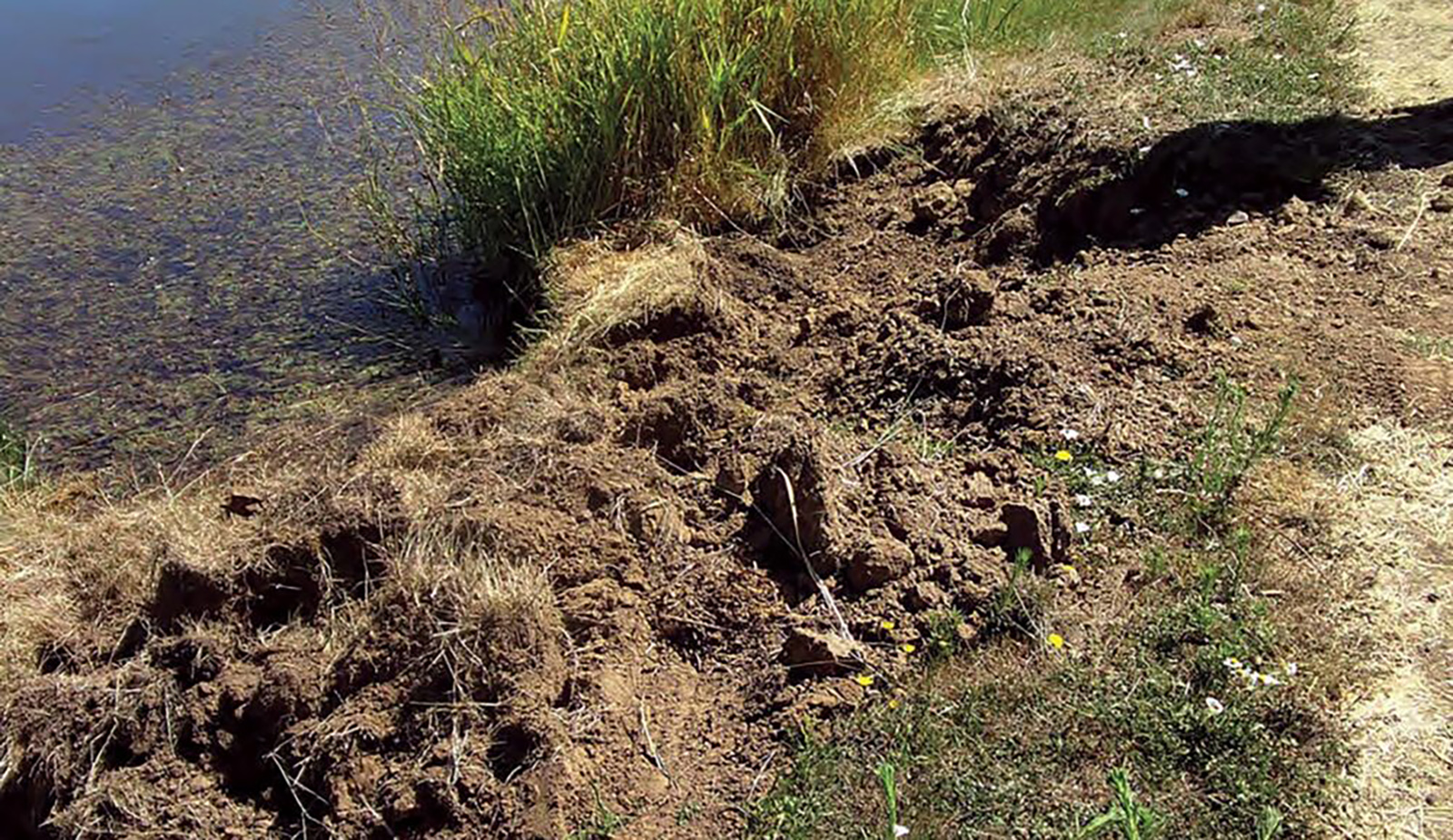
An example of the damage nutria can do.
Nutria are native to South America, but were introduced into Louisiana and several other states by commercial fur farmers beginning in the late 1800s. Eventually many of the fur farms went bust and the nutria escaped or were released into the wild. Nutria crossed into Virginia from North Carolina, slowly creeping their way along the eastern coastal rivers and wetlands. It took them 50 years to expand their range north of the James River, but the Chickahominy is currently the northernmost river system they’ve entered in Virginia.
A large, grayish-brown, stout-bodied rodent, nutria weigh from less than 12 to over 20 pounds, with a total length of up to 3 ¼ feet. The first three toes of the hind foot are webbed. Nutria are prolific breeders, reaching sexual maturity in four to six months and breeding year-round in most of their range. They produce up to three litters each year of four to five young, a reproduction rate that left unmanaged can quickly lead to thousands upon thousands.
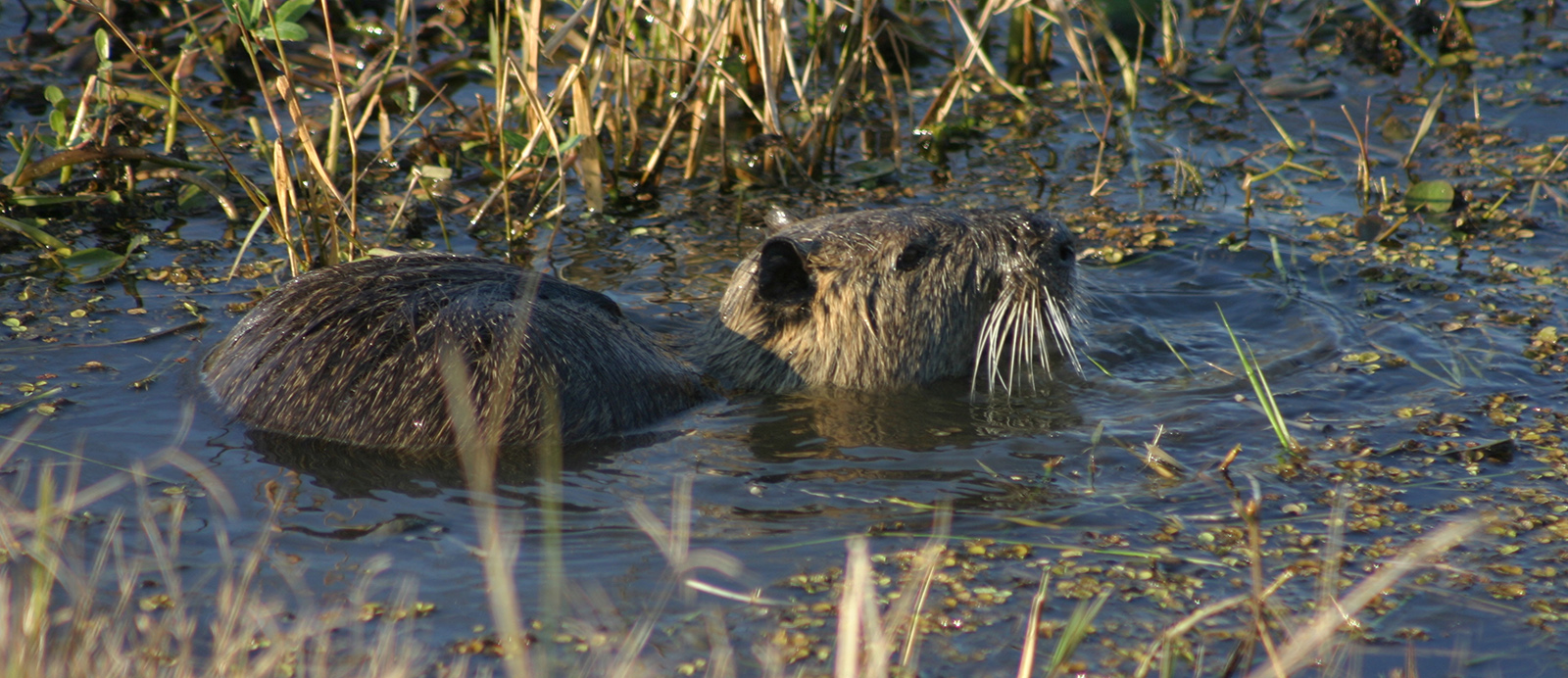
A nutria in water. Photo by USFWS
They build burrows, and winter nesting platforms 20–30 inches wide and 6–9 inches above the water. They also build simple nests in vegetation. Burrowing and burrow occupancy may be limited to the coldest part of the winter. This species is nocturnal, but they may be seen at any time. The life span average in the wild is 4 to 4 ½ years.
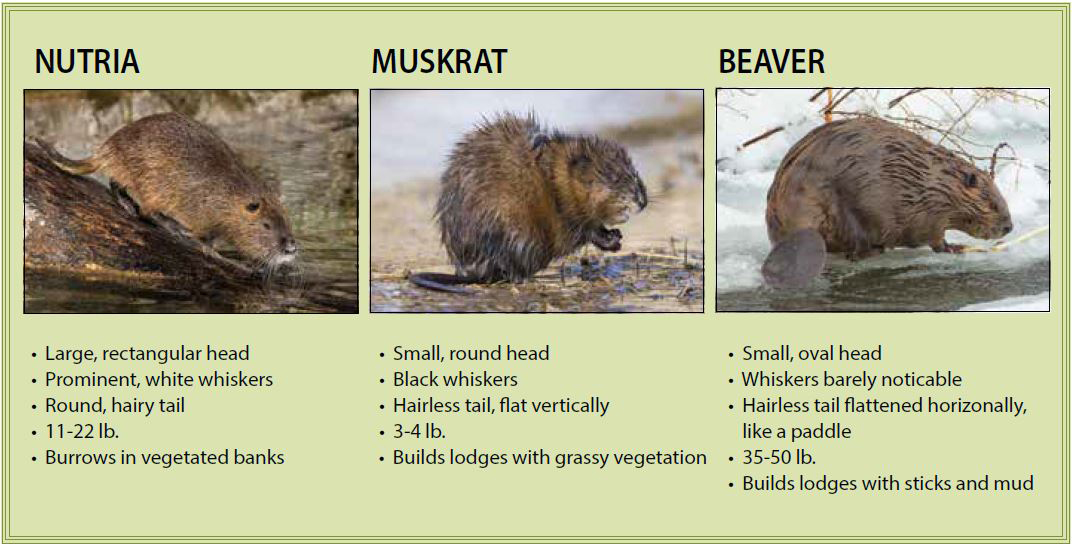
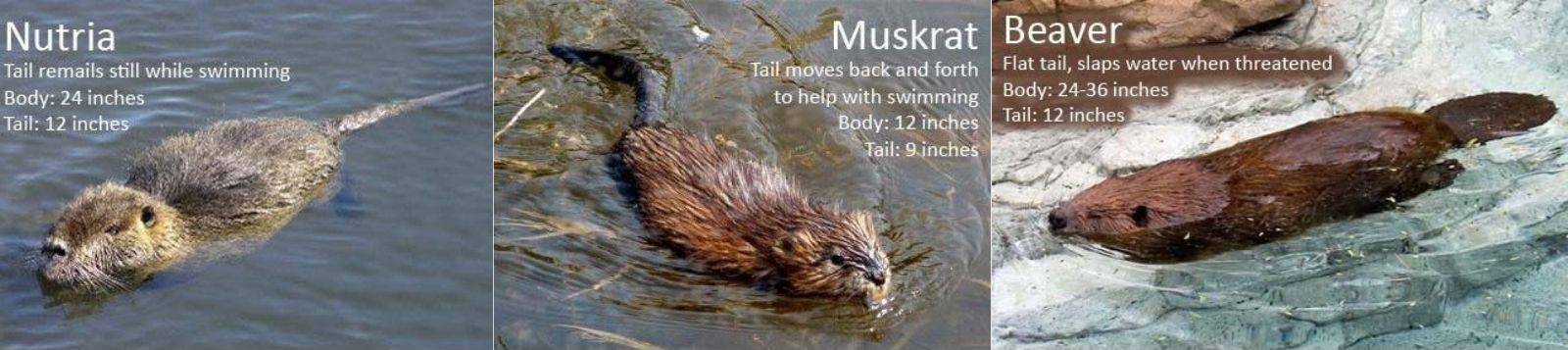
Nutria can easily be confused with muskrat or beaver. Nutria are larger than muskrats but smaller than beavers, and have a back that appears more arched. Notably, the nutria has a hairy, round tail and prominent, white whiskers. While swimming, the nutria will keep their tails straight, dragging behind them, while a muskrat will move their tails in a snake-like fashion when swimming.
Distribution:
They are found in the southeastern third of the state, with most sightings occurring east of Interstate 95 and south of the James River. Nutria have also been found in lakes and rivers in the Central Piedmont region near the southern border. This species thrives in fresh or brackish marshes where abundant vegetation is available for food.
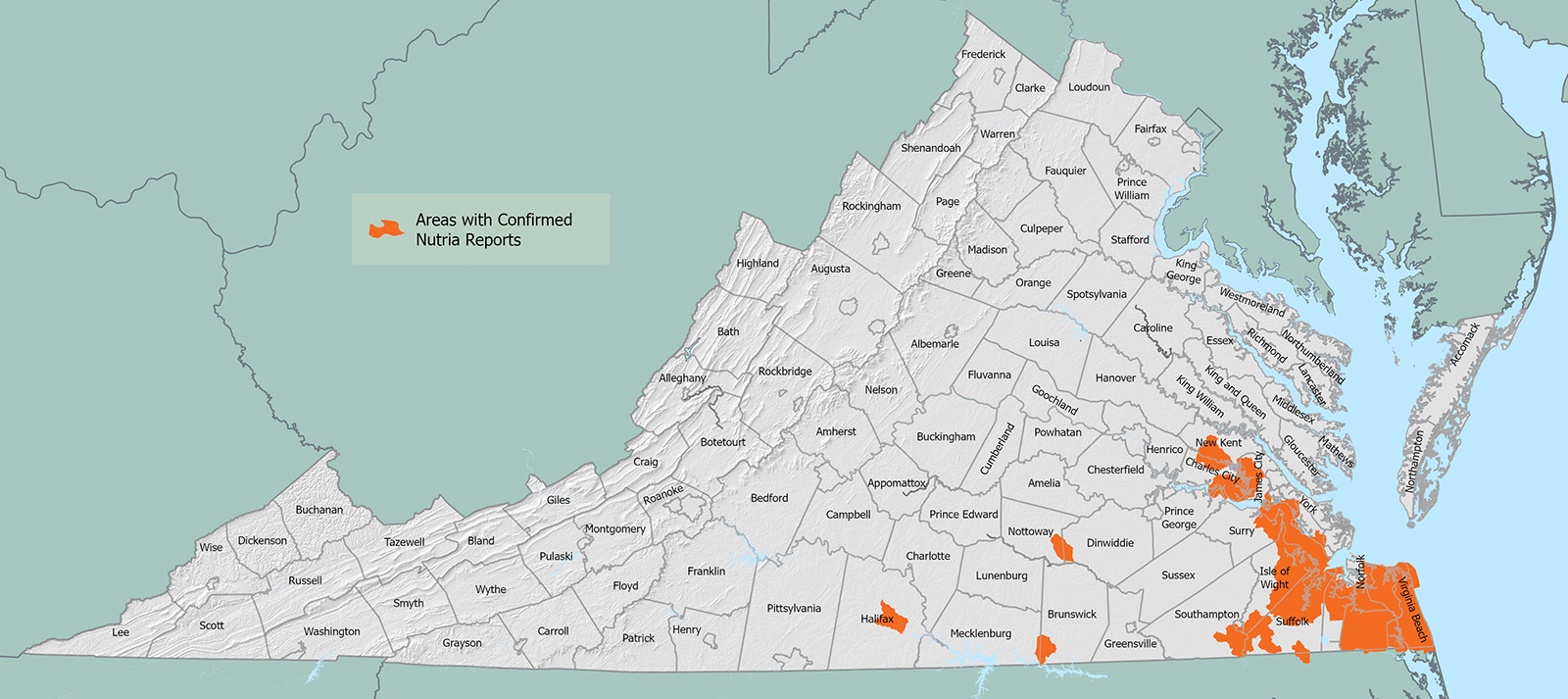
Confirmed nutria sightings as of February 2026.
How You Can Help
Private landowners, citizens, and conservation organizations can help protect our valuable wetlands in Virginia. You can assist by:
- Reporting any nutria you see. If possible, try to get a photograph of the animal before sending in the report.
Last updated: April 27, 2026
The Virginia Department of Wildlife Resources Species Profile Database serves as a repository of information for Virginia’s fish and wildlife species. The database is managed and curated by the Wildlife Information and Environmental Services (WIES) program. Species profile data, distribution information, and photography is generated by the Virginia Department of Wildlife Resources, State and Federal agencies, Collection Permittees, and other trusted partners. This product is not suitable for legal, engineering, or surveying use. The Virginia Department of Wildlife Resources does not accept responsibility for any missing data, inaccuracies, or other errors which may exist. In accordance with the terms of service for this product, you agree to this disclaimer.