
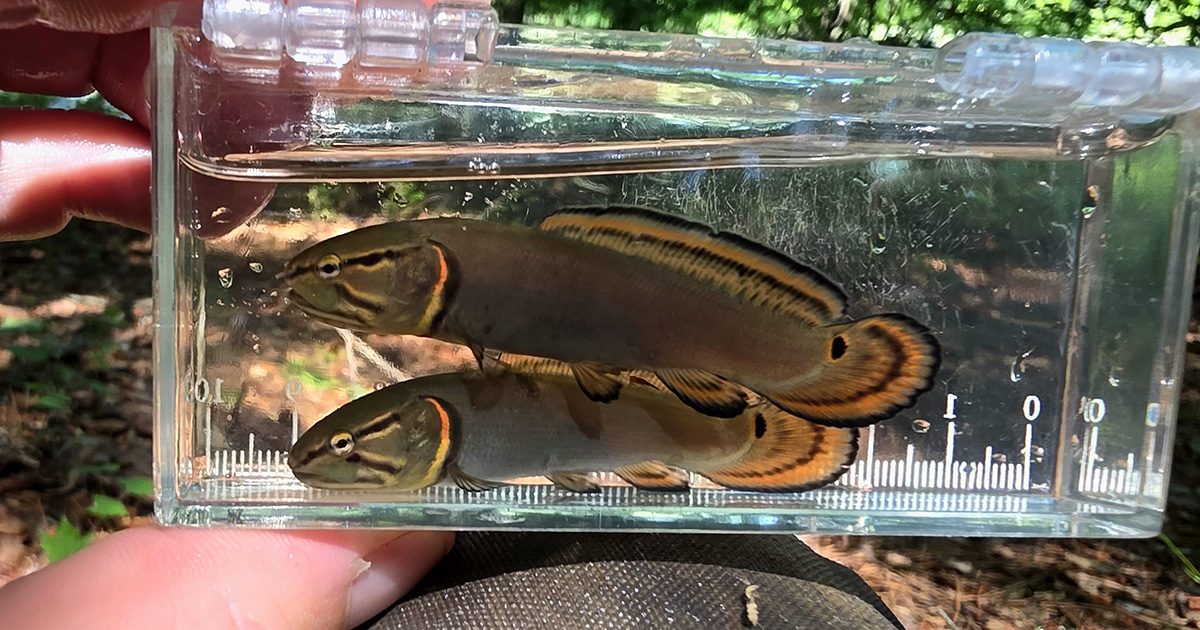
Two juvenile Bowfin that were collected during a DWR fisheries survey.

A Bowfin being processed during an electrofishing survey. ©Photo by Scott Herrmann
Fact File
Scientific Name: Amia calva
Classification: Osteichthyes, Order Amiiformes, Family Amiidae
Size: Bowfin can grow beyond 30 inches in length and 10 pounds in weight in Virginia
Life Span: Bowfin often live for about 12 years in Virginia, but can live for much longer under certain conditions
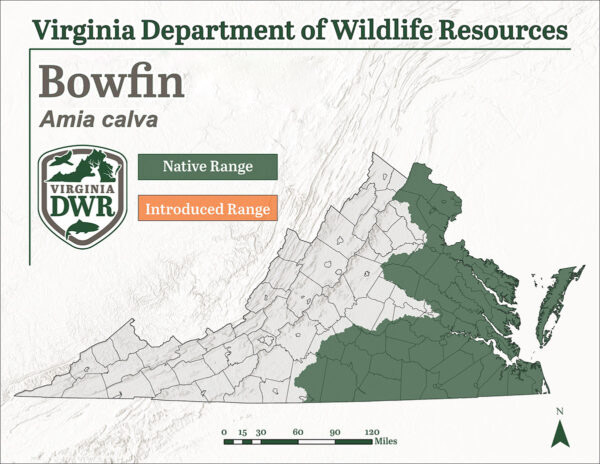
Distribution
Bowfin are native to many of Virginia’s coastal plain waters east of the Blue Ridge.
Identifying Characteristics
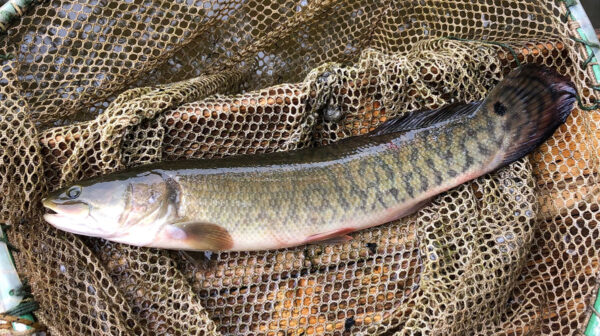
Bowfin being processed during an electrofishing survey. ©Photo by Scott Herrmann
- Elongated dorsal (top) fin along the back, with a distinct disconnect from the caudal (tail) fin
- Short anal fin
- A mouth full of razor sharp teeth
- A stout body, cylindrical in shape, with armorlike scales
- No scales on head
- Dark brown to olive on top, transitioning to a cream underbelly
- Spawning individuals may have chartreuse on the fins, head, or underbelly
- Males commonly have an outlined black spot near their tail
How to Discern from Similar Looking Species
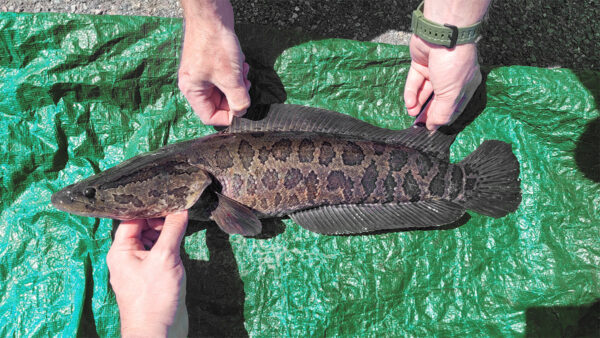
A Northern Snakehead. Note the elongated anal fin, scales on head, and snakelike patterning.
Northern Snakehead Channa argus
- The anal (bottom) fin on a Bowfin is not elongated
- Bowfin do not have scales on the top of their head while Northern Snakehead do
Diet
The Bowfin is a top-level predator in the waters they inhabit. Using a combination of speed, suction, and rows of razor sharp teeth, they prey heavily upon other species of fish. They are masters of ambush and use their undulating dorsal and anal fins to strike quickly when prey get close.
Habitat
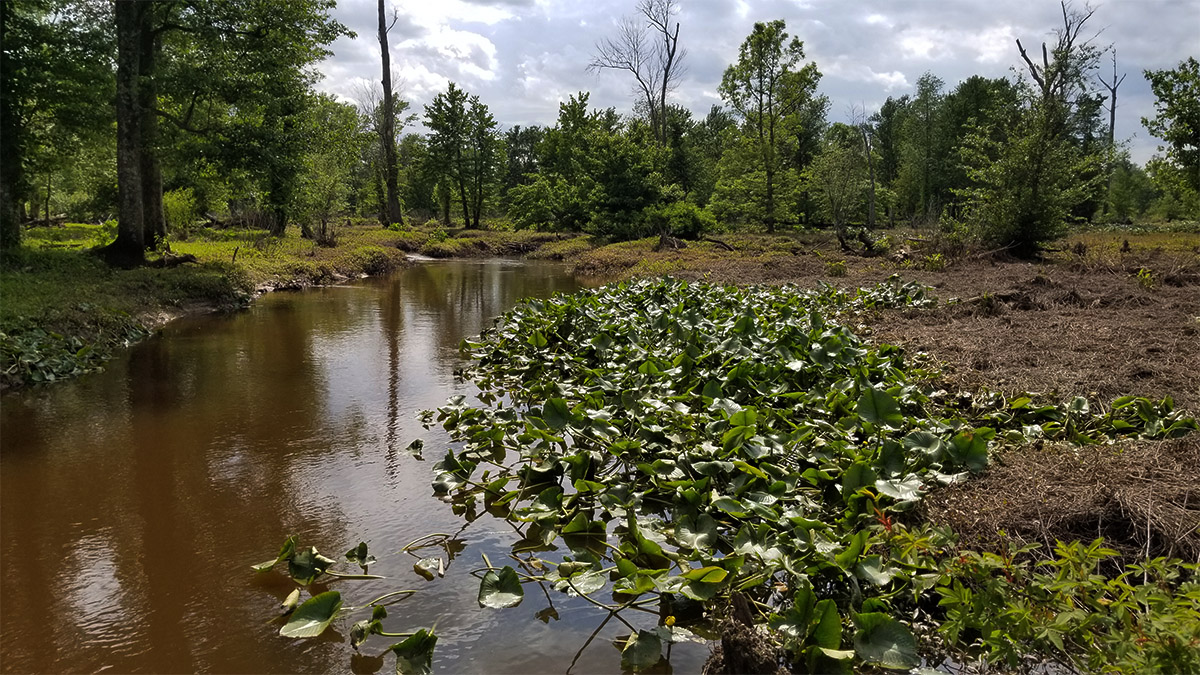
Bowfin thrive in lazy side-channels and backwaters that have an abundance of cover. Bowfin can often be found near submerged structures such as downed trees, stumps, and Cypress knees. They will also utilize undercut banks and submerged aquatic vegetation.
Reproduction
The Bowfin spawns in shallow vegetated areas from April to June in Virginia. The male builds a nest or multiple nests by using their fins to clear away vegetation and create a slight depression in the substrate.

A Bowfin captured during an electrofishing survey. ©Photo by Matthias Gaffney
Once a female has deposited eggs that the male has fertilized, the male will defend the nesting site. During the spawn, Bowfin may display an array of greens in the fins and throughout the belly.
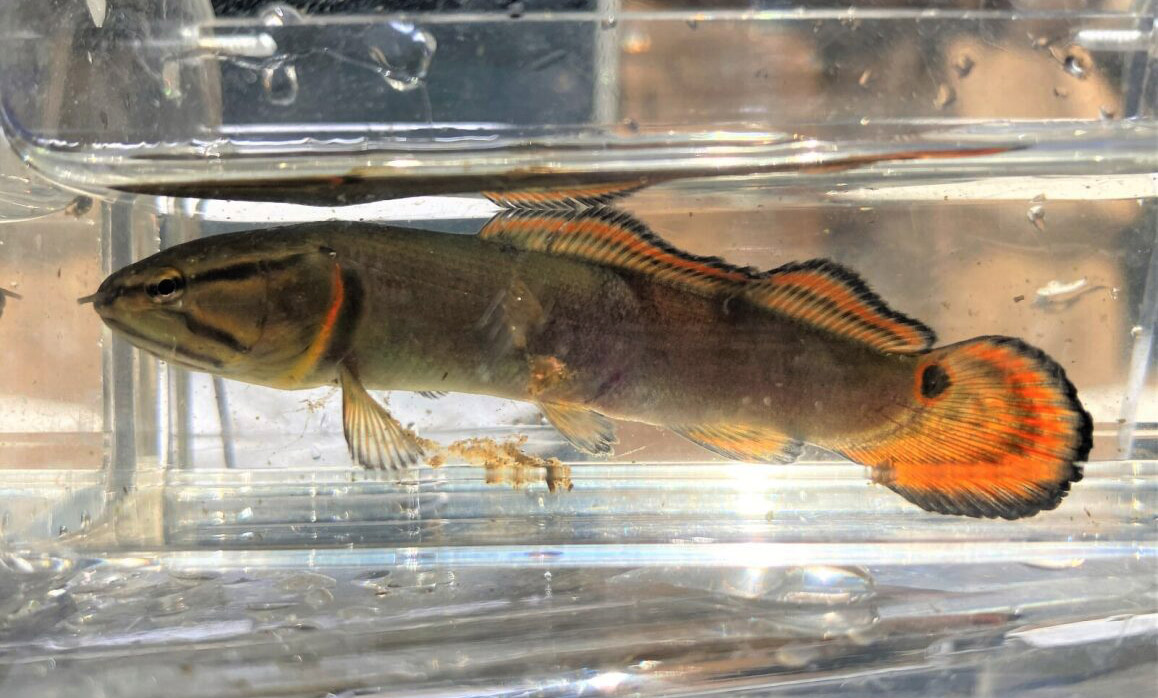
A juvenile Bowfin. Photo by ©Maddie Smith – DWR
Last updated: June 18, 2026
The Virginia Department of Wildlife Resources Species Profile Database serves as a repository of information for Virginia’s fish and wildlife species. The database is managed and curated by the Wildlife Information and Environmental Services (WIES) program. Species profile data, distribution information, and photography is generated by the Virginia Department of Wildlife Resources, State and Federal agencies, Collection Permittees, and other trusted partners. This product is not suitable for legal, engineering, or surveying use. The Virginia Department of Wildlife Resources does not accept responsibility for any missing data, inaccuracies, or other errors which may exist. In accordance with the terms of service for this product, you agree to this disclaimer.