
Habitat at Home helps you to make your space a place where wildlife can thrive. Follow the guidelines below to help make your space a Habitat at Home!
Want to share the word and recognize your achievement?
Certify Your Habitat at HomeFood

Provide Food Naturally—Native Plants are the Building Blocks of Healthy Habitats
- How do I know what’s native?
Nectar and Pollen—From Native Flowers
- Hint: long tubular flowers are often a favorite of hummingbirds
- Pick species that bloom at different times to provide food for pollinators throughout the growing season
- Early spring: Creeping phlox
- Fall: New England Aster
Leaves

- Provide food for herbivores, especially native insects!
- Insects are food for many species of wildlife, including birds, lizards, frogs, toads, and more!
Seeds
- Eaten by sparrows, finches, and many other songbirds, as well as small mammals like white footed mice and chipmunks.
Nuts
- These large hard fruits provide high energy food for a variety of wildlife
- Acorns are a favorite of deer, turkey, squirrels and even wood ducks! Lots of insects feed on them too.
What About Bird Feeders?
- Bird feeders can be a great addition to a Habitat at Home!
- Primarily providing benefits for us
- Must be done responsibly—check out DWR’s Safe Bird Feeding guidance
Water
Providing freshwater—all wildlife need water either to drink or live in!
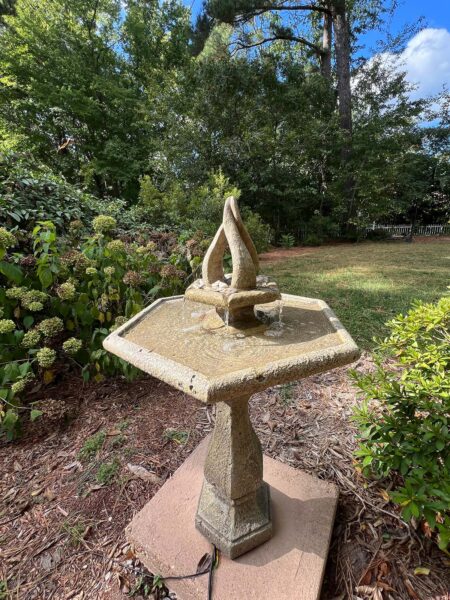
Bird Bath
-
- Sloped edges for different sized birds, rough texture, not more than 3 inches deep
- Wildlife are attracted to the sound of moving water—add a small pump or fountain
- Change water frequently to keep fresh and prevent mosquitoes (at least every 5 days to prevent mosquito larvae from developing)
- Clean regularly with a stiff brush and a solution of 1 part bleach to 9 parts water. Rinse thoroughly before refilling.
In-Ground Water Feature
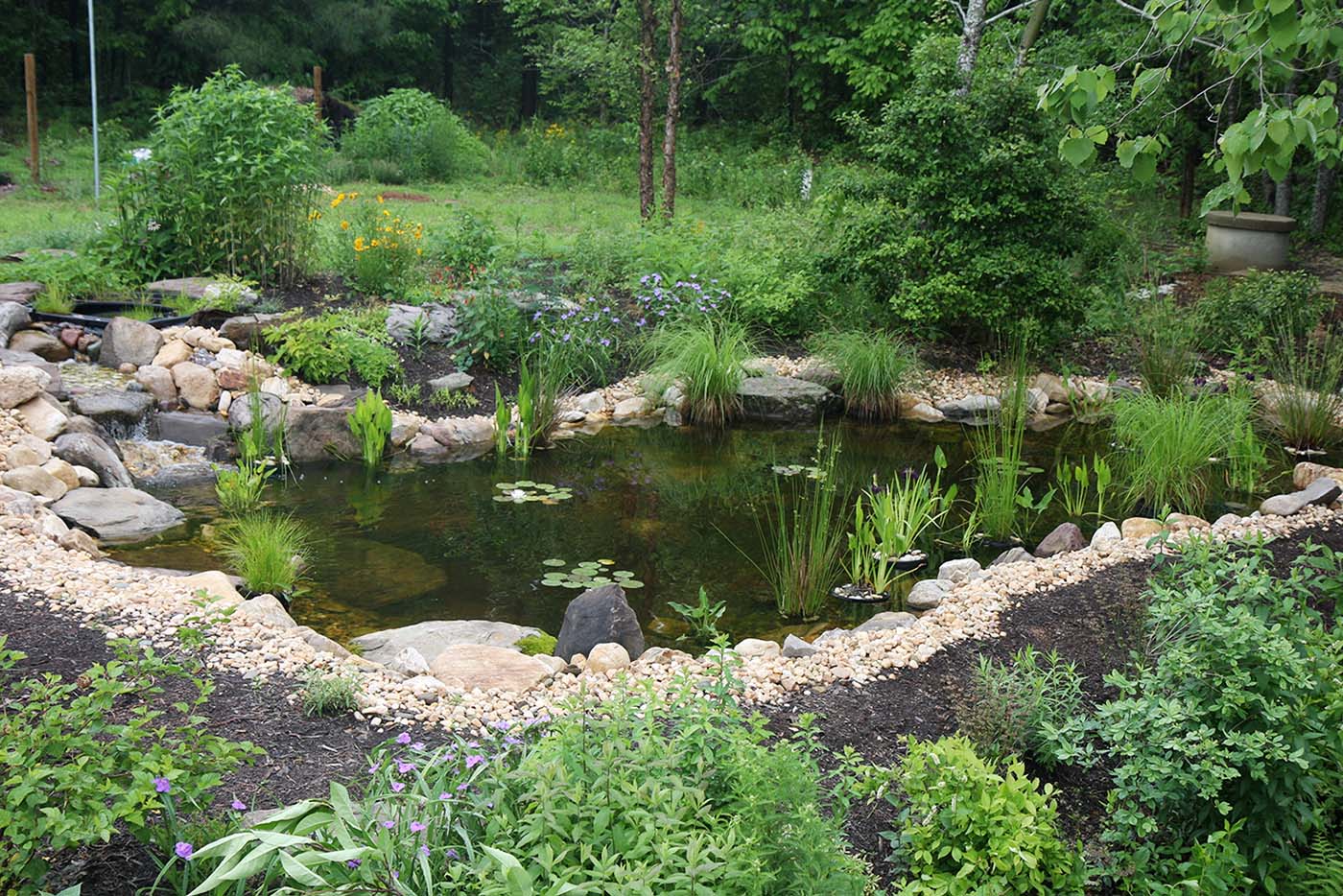
- As simple or complex as you’d like!
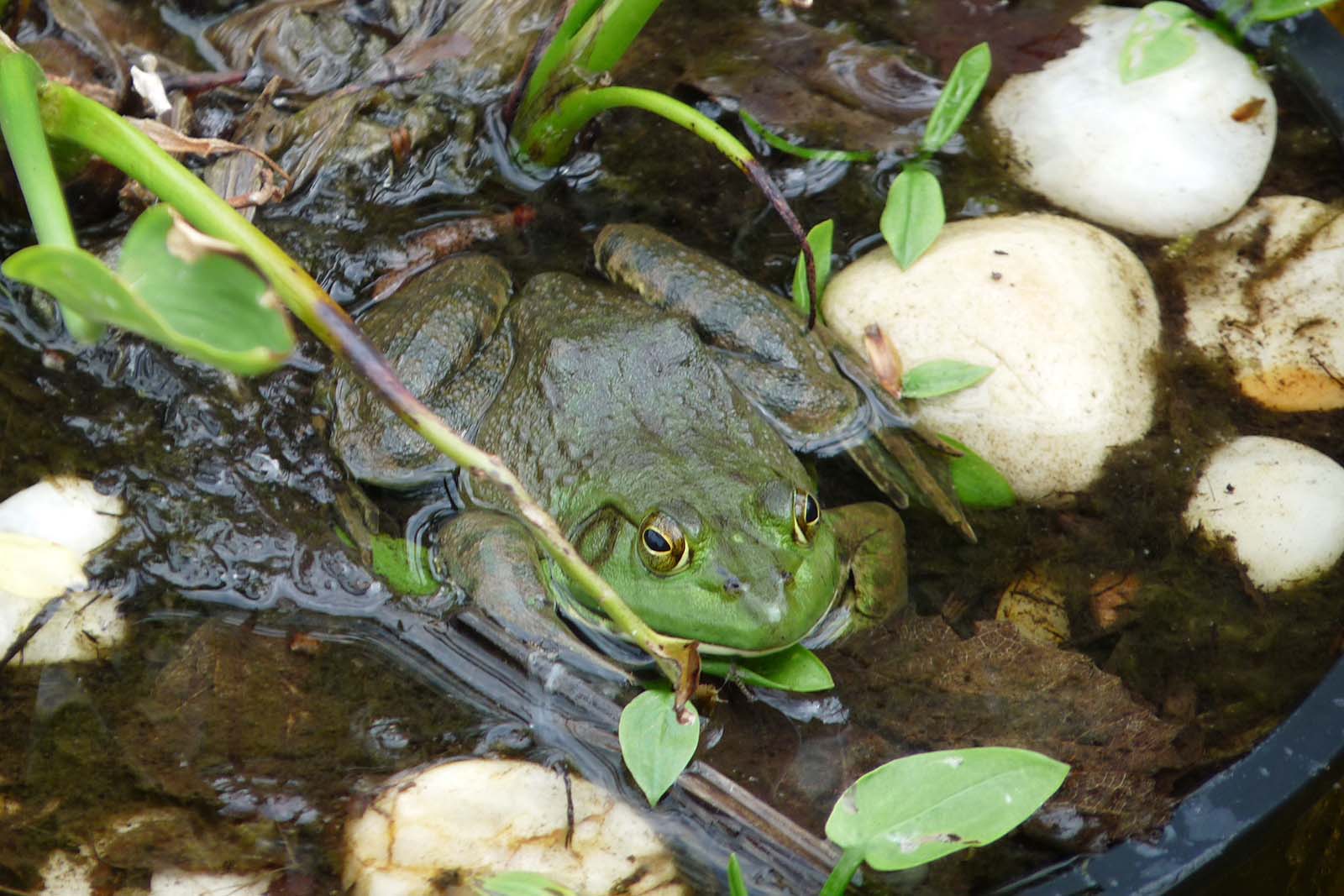
- May provide habitat for aquatic wildlife, such as dragonflies, diving beetles, frogs, and toads)
- Provide a sloped edge or other ways for amphibians to crawl out
- Skip the fish—and never buy or move frogs and toads—they’ll find the pond on their own.
- Multiple layers or shelves provide different habitats and places for aquatic plant pots
- Add native aquatic plants that will help shade and cool the water:
- Native sedges, Carex spp.
- Cardinal Flower
- Swamp milkweed
- Keep these aquatic plants in plastic pots so they won’t crowd your space
- Should be deep enough not to freeze in winter (from 18″–30″ depending on cold winters and where you live)
- Leaving some leaf litter helps provide food and habitat for invertebrates
- Pond Instructions
- What about mosquitoes?
- Change water in bird baths every 4–5 days
- Keep water moving in ponds and other in-ground features
- Native insects will also use your pond and help keep mosquitoes in check
Shelter and a Place for Family
Wildlife need cover to protect them from harsh weather and predators, as well as provide a place to nest and raise young.


Types of cover
- Trees
- Groundcover and herbaceous plants
- Leave the leaves and stems – many insects will spend the winter in the stems form last year’s flowers
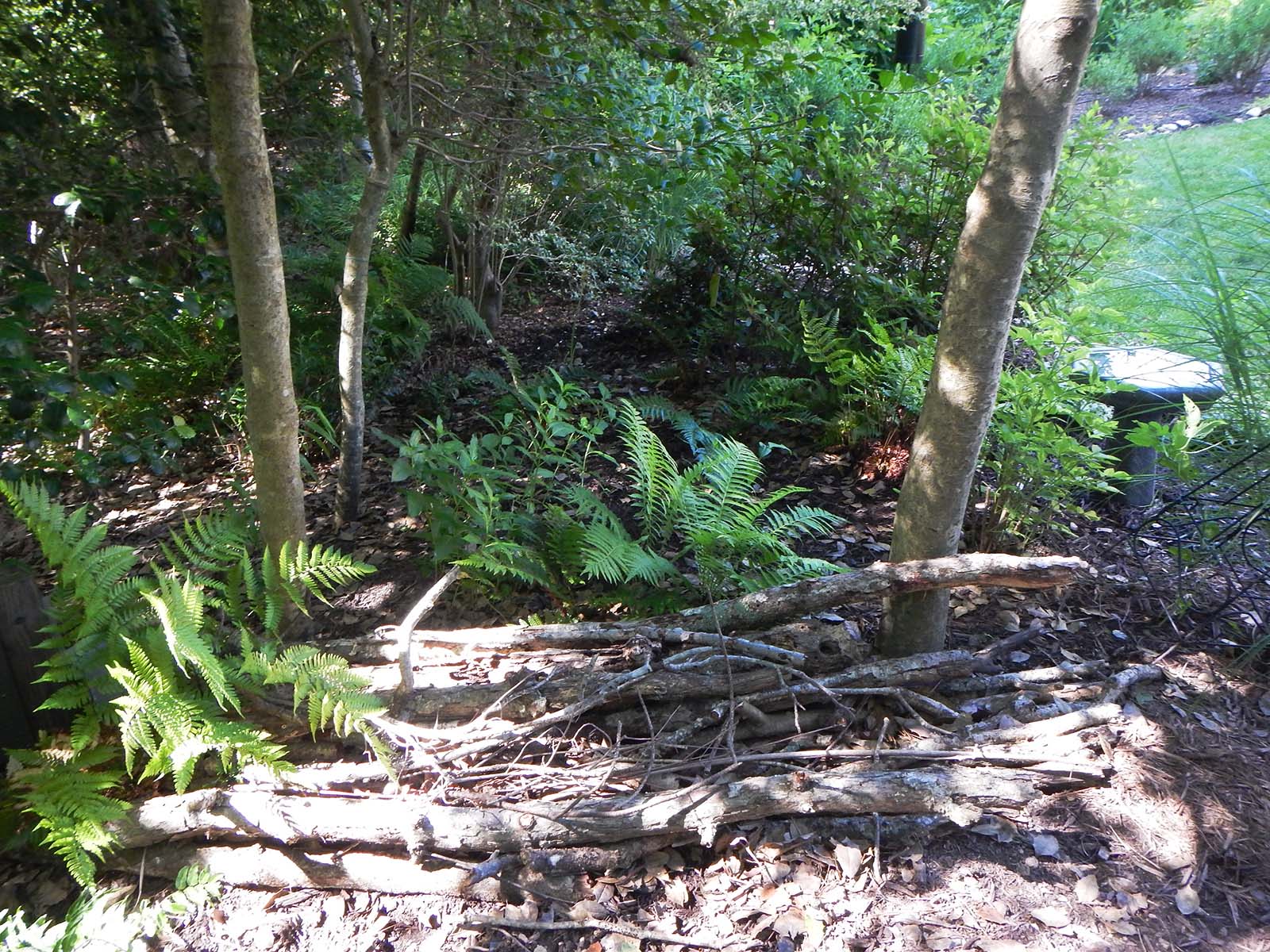
- Woody debris and stones
- Shrubs (especially evergreens) and native vines (can be trained to an arbor)
- Brush piles, rock piles, and logs
- Snags
Raising Young and Nesting
- Wildlife will use many of the cover types above to nest and raise young
- You may also include a well-designed nest box—learn more about design and placement
- Bat boxes: require specific designs and placement to be successful
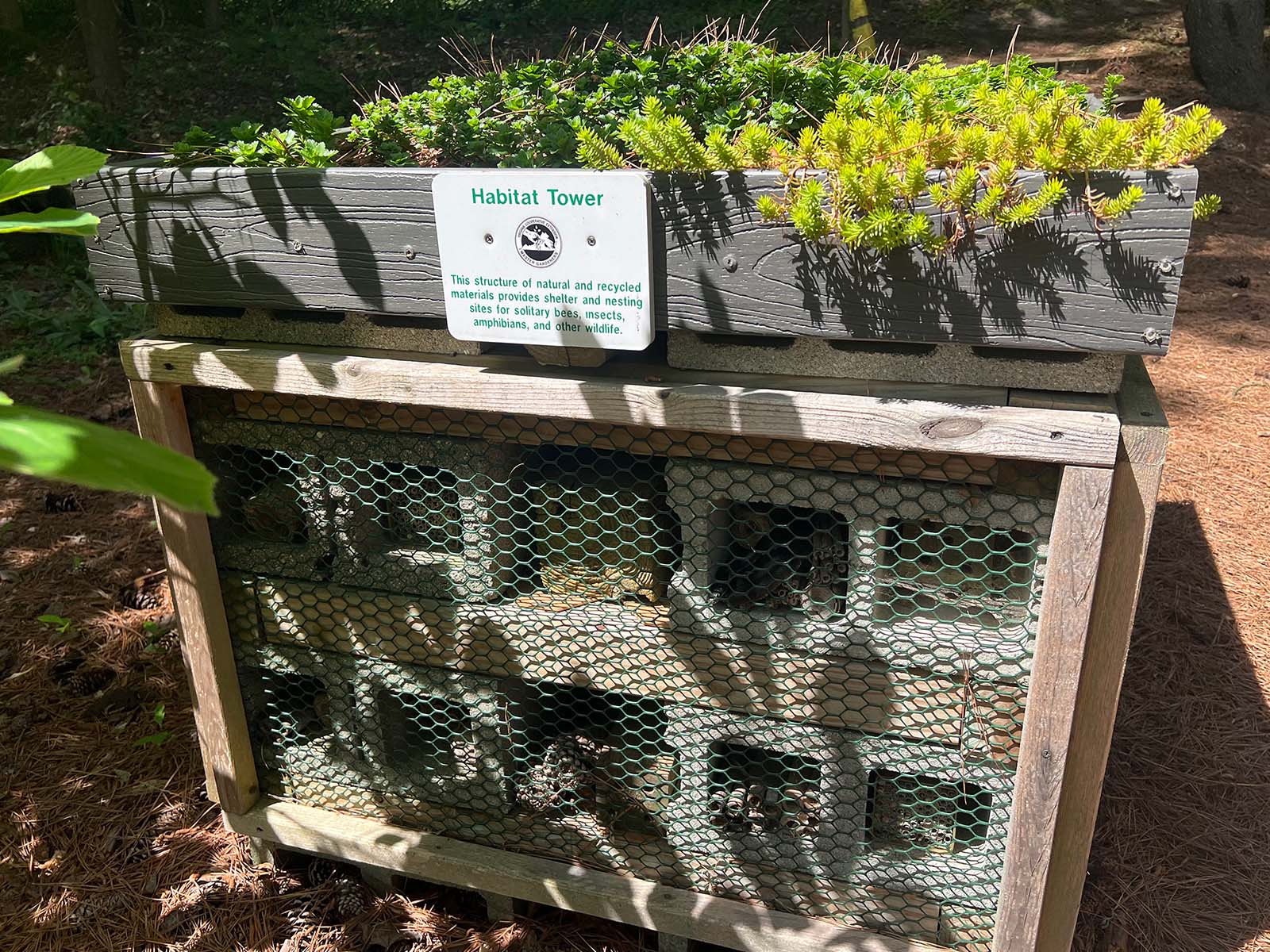
- Bee hotels: can be helpful but have some pitfalls
Space
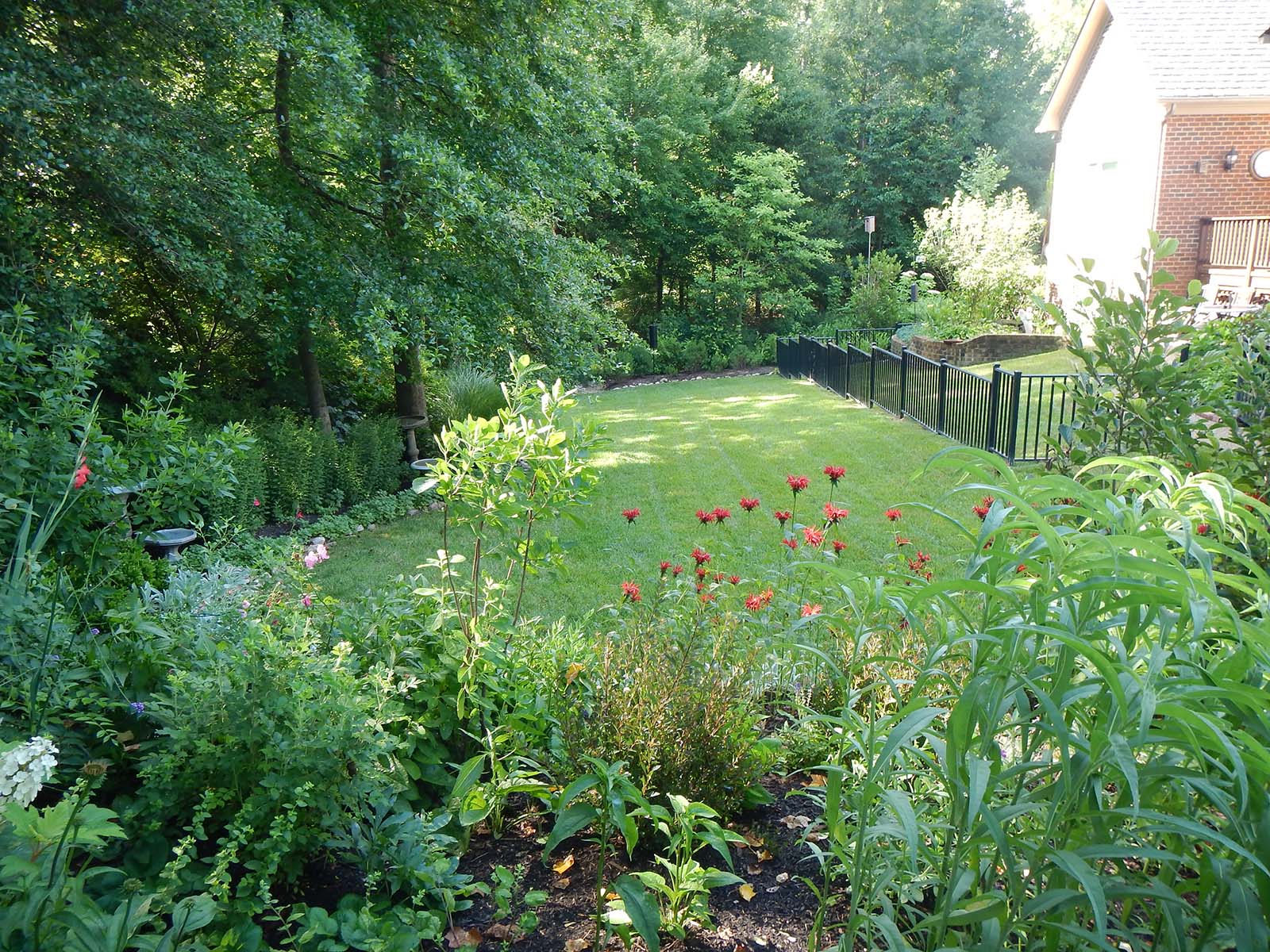
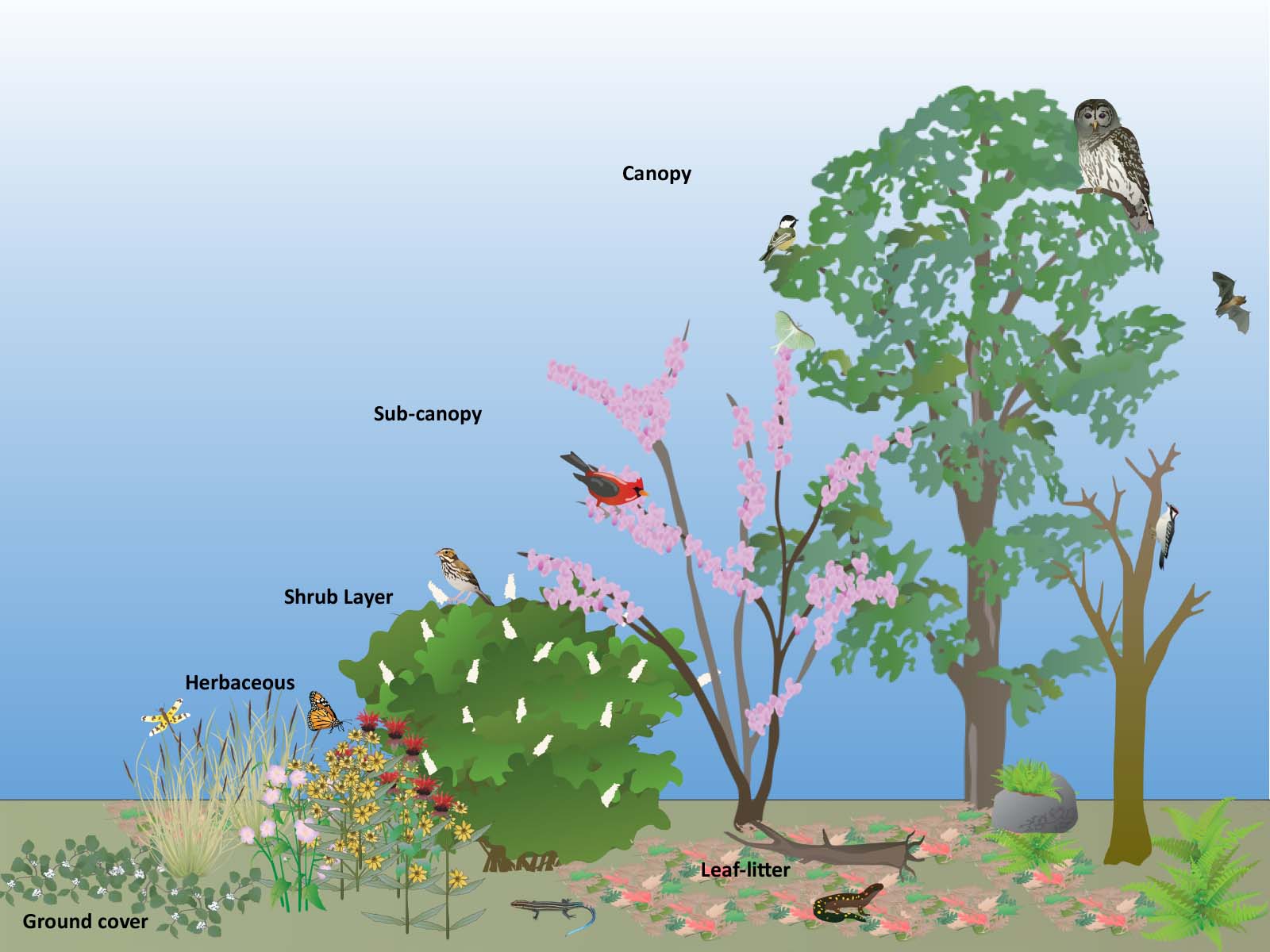
Arranging the space in habitat provides wildlife with the places they need to make a living
- Layers of habitat make a variety of homes.
- Design your habitat in ways that help wildlife move from one resource to the other.
- Keep water and food sources close to cover and shield from winter winds
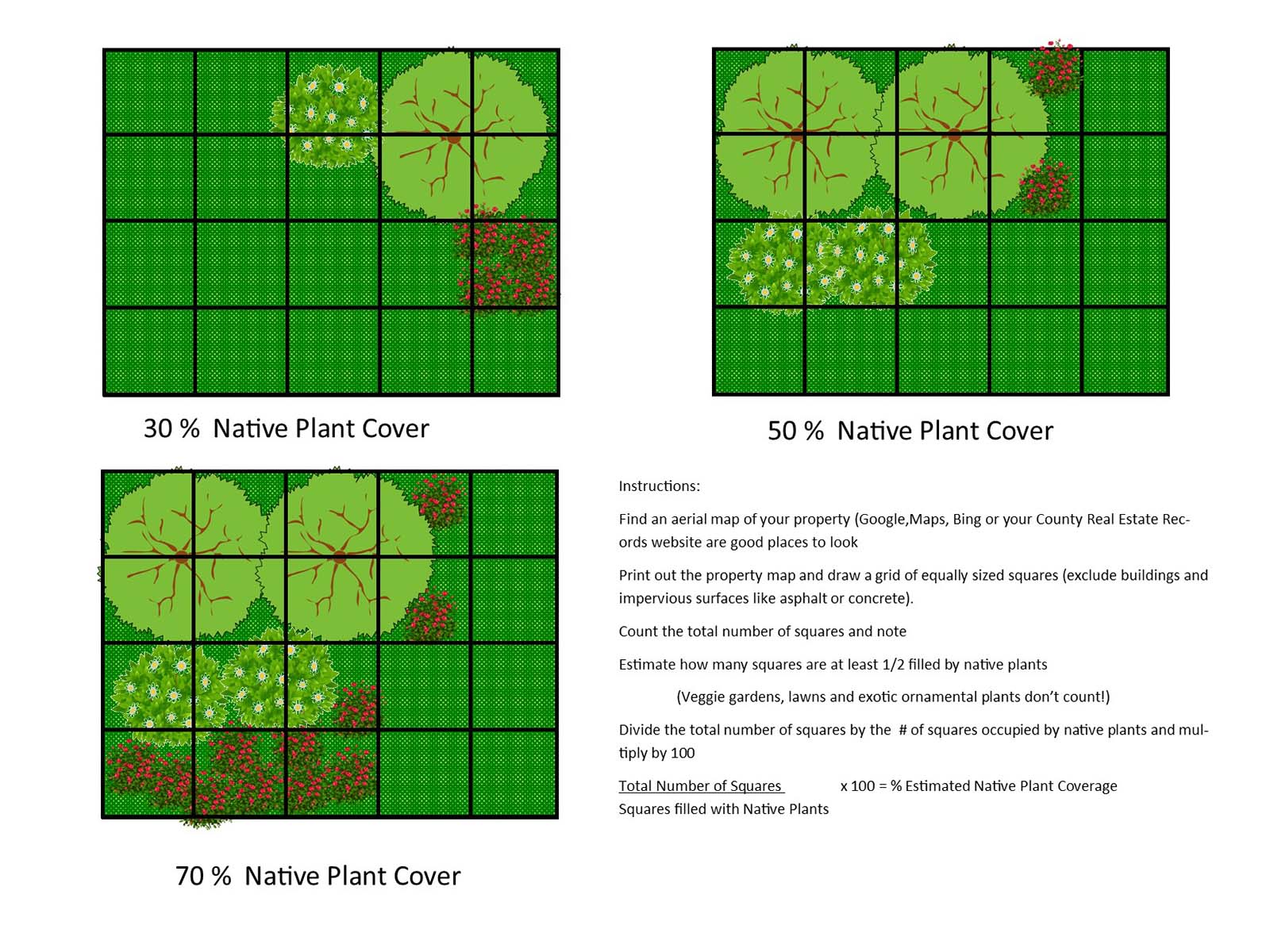
- How much of your landscape is plants native to Virginia? Aim for at least 25% native plant coverage in your space
- Some research shows that 70% native plant cover helps grow enough bugs to support native birds trying to raise young
Make it Safe! Keep it Sustainable…
If you’re going to invite wildlife into your space, take some simple steps to keep them safe!
- Keep Cats Indoors
- If you really want your cat to enjoy the outdoors, try a catio!
- Reduce or eliminate pesticide use
- Monitor windows—especially those that face habitat areas or feeders
- Dark skies: minimize light pollution which is disruptive to many species (birds and insects)
When Issues Arise…
Wildlife Conflict Help Line
Injured or Orphaned Wildlife
Alter Habitat to Address Issues
- Keep vegetation trimmed close to homes
- Don’t feed pets outdoors (if you must feed outdoors, don’t leave food out—feed only what is consumed immediately)
- Remove attractants (garbage cans, bird feeders)