
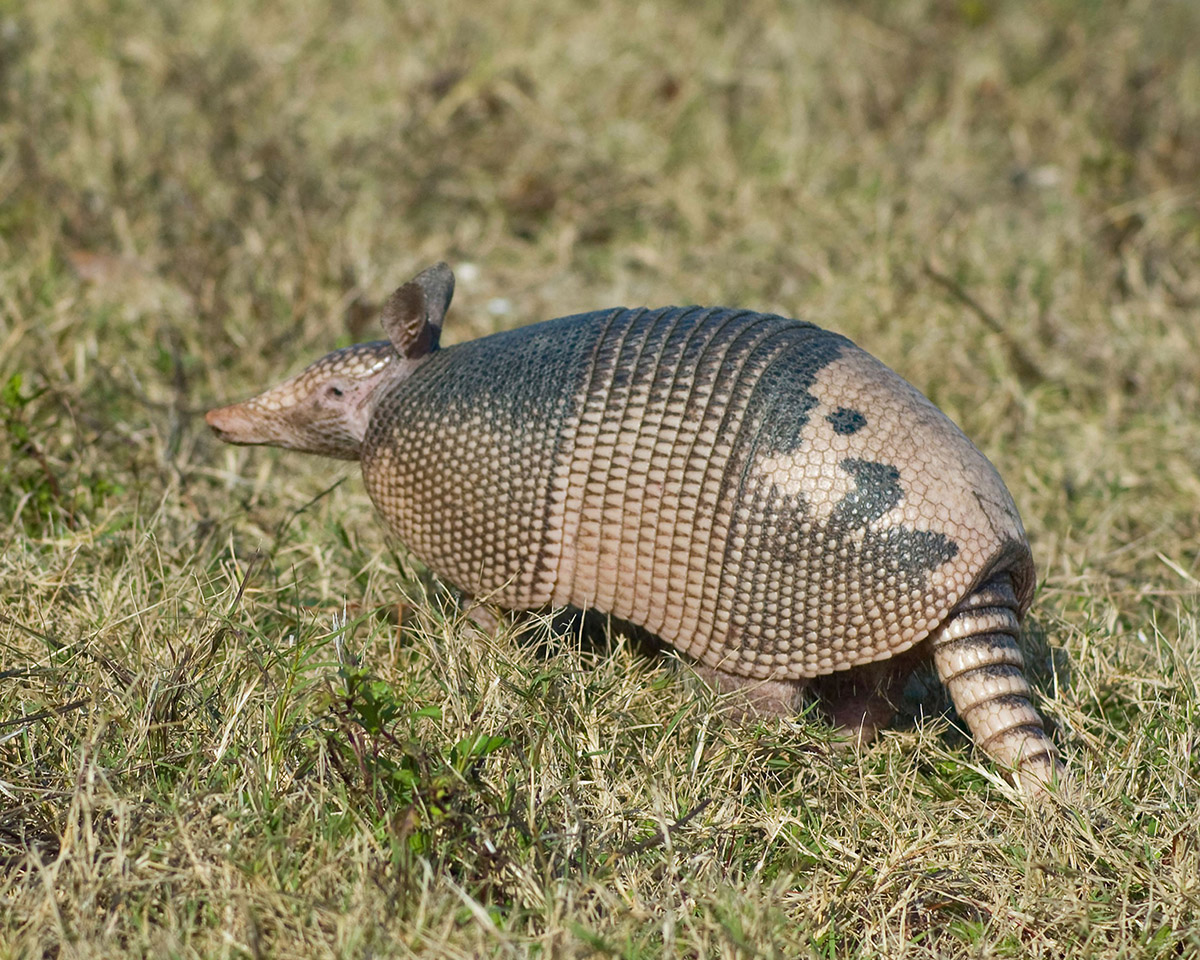
A Nine-Banded Armadillo alert in an open field. Photo by Carole Robertson, courtesy of US Fish and Wildlife Service.
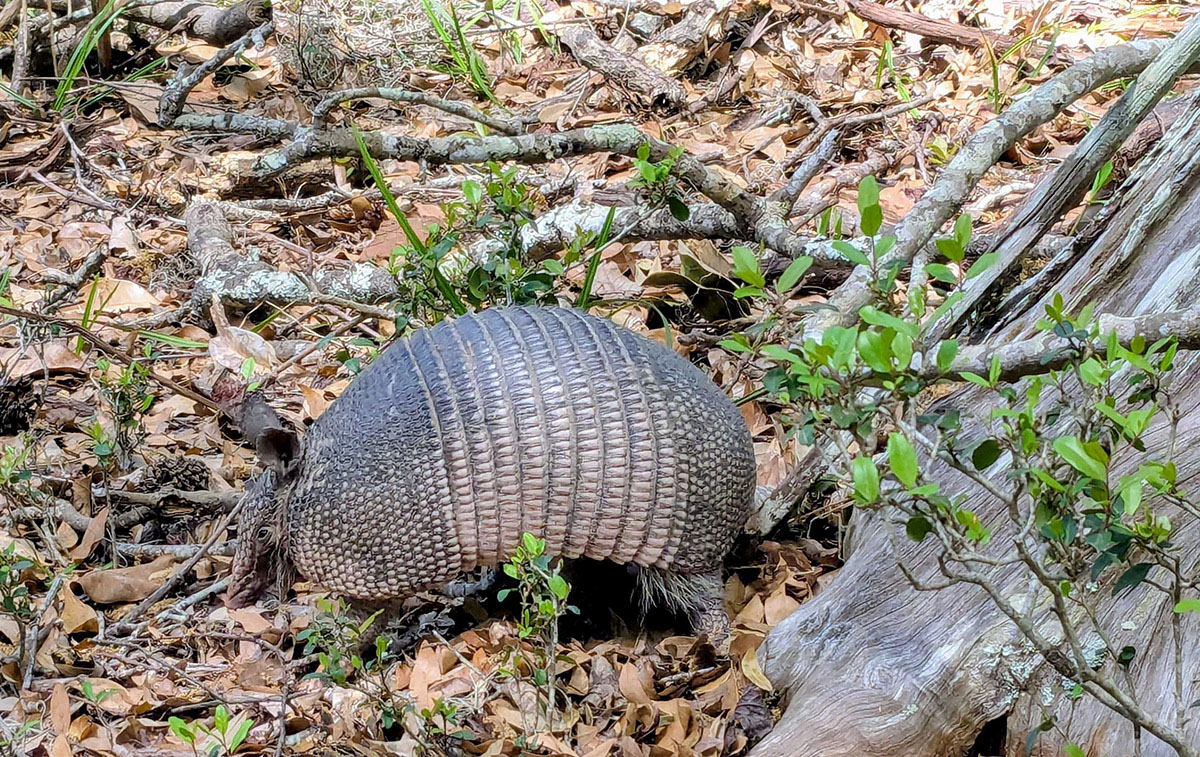
A Nine-Banded Armadillo uses its long nose to find bugs and grubs on the forest floor. Photo by ©Holly Kays.
Fact File
Scientific Name: Dasypus novemcinctus
Classification: Mammalia, Order Cingulata, Family Dasypodidae
Size: Adult Nine-Banded Armadillo range from 8-17 pounds; their body (tail excluded) averages about 16-20 inches in length
Life Span: Nine-Banded Armadillo live for an average of 7-12 years in the wild
Distribution
The Nine-banded Armadillo is the only armadillo species found in the wild within the United States. While not native to Virginia, the armadillo has been found in the southwest part of the state since 2019 as the species expands its range eastward and northward across the U.S. While still quite rare in Virginia, there have been about a dozen confirmed sightings in southwest Virginia. Armadillos have been confirmed in the following VA counties: Buchanon, Lee, Montgomery, Pulaski, Russell, Washington, Wise, and Wythe.
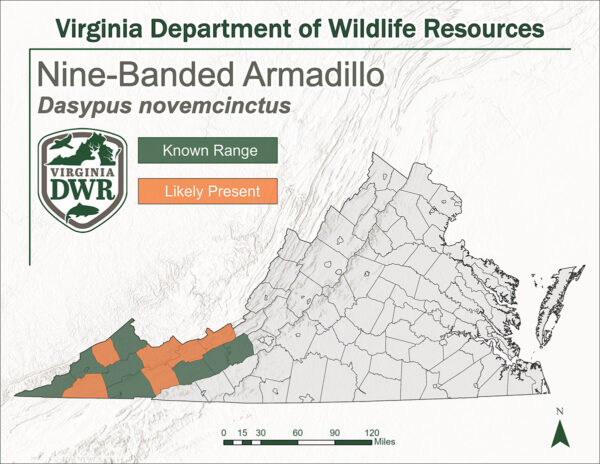
*There have been additional reports from Prince Edward, Smyth, and Tazewell counties but these armadillos were suspected to be accidentally transported.
Identifying Characteristics
- Armored with bony dermal plates
- Short, stocky legs
- Relatively small head
- 7 to 11 bands along their armored body
- Males (10-17 pounds) can attain slightly larger size than females (8-13 pounds)
Habitat and Behavior
Armadillos have poor sight and hearing, but a keen sense of smell. Armadillos are primarily crepuscular or nocturnal, but may be active at any time of day or night. While they do burrow, Nine-Banded Armadillos do not hibernate. When threatened, armadillos may jump straight up in the air, run away, or hide in a burrow. Armadillos breed in the summer, with four identical young born in March or April.
Diet
Armadillos are largely insectivores, feeding on beetles, ants, slugs, snails, earthworms, and millipedes. They will also feed on plant material, fungi, eggs, amphibians, and reptiles when available. They rely on their sense of smell to locate food and are powerful diggers.
Have you seen an Armadillo in Virginia? DWR is seeking your report!
The Virginia Department of Wildlife Resources is actively seeking reports of Armadillos from within the Commonwealth. If you have any verifiable information (i.e., photos, video, etc.) regarding the occurrence of Armadillos in Virginia, please enter your information using Virginia DWR’s Rare Animal Observation Form by tapping here.
Last updated: April 20, 2026
The Virginia Department of Wildlife Resources Species Profile Database serves as a repository of information for Virginia’s fish and wildlife species. The database is managed and curated by the Wildlife Information and Environmental Services (WIES) program. Species profile data, distribution information, and photography is generated by the Virginia Department of Wildlife Resources, State and Federal agencies, Collection Permittees, and other trusted partners. This product is not suitable for legal, engineering, or surveying use. The Virginia Department of Wildlife Resources does not accept responsibility for any missing data, inaccuracies, or other errors which may exist. In accordance with the terms of service for this product, you agree to this disclaimer.