
Nutria (Myocastor coypus) are large, grayish-brown, stout-bodied rodents that are invasive in Virginia and can have detrimental impacts on our wetlands. Originally introduced from South America, wild populations of nutria can now be found in the southeastern corner of the state and along the southern border but are expanding their range north and west. A semi-aquatic rodent, nutria are armed with giant, orange incisors and a voracious appetite for vegetation. They can chew through beautiful wetland landscapes, turning them into bare patches of mud that then become eroded to open water over time. They eventually outcompete native wildlife by destroying their habitat.
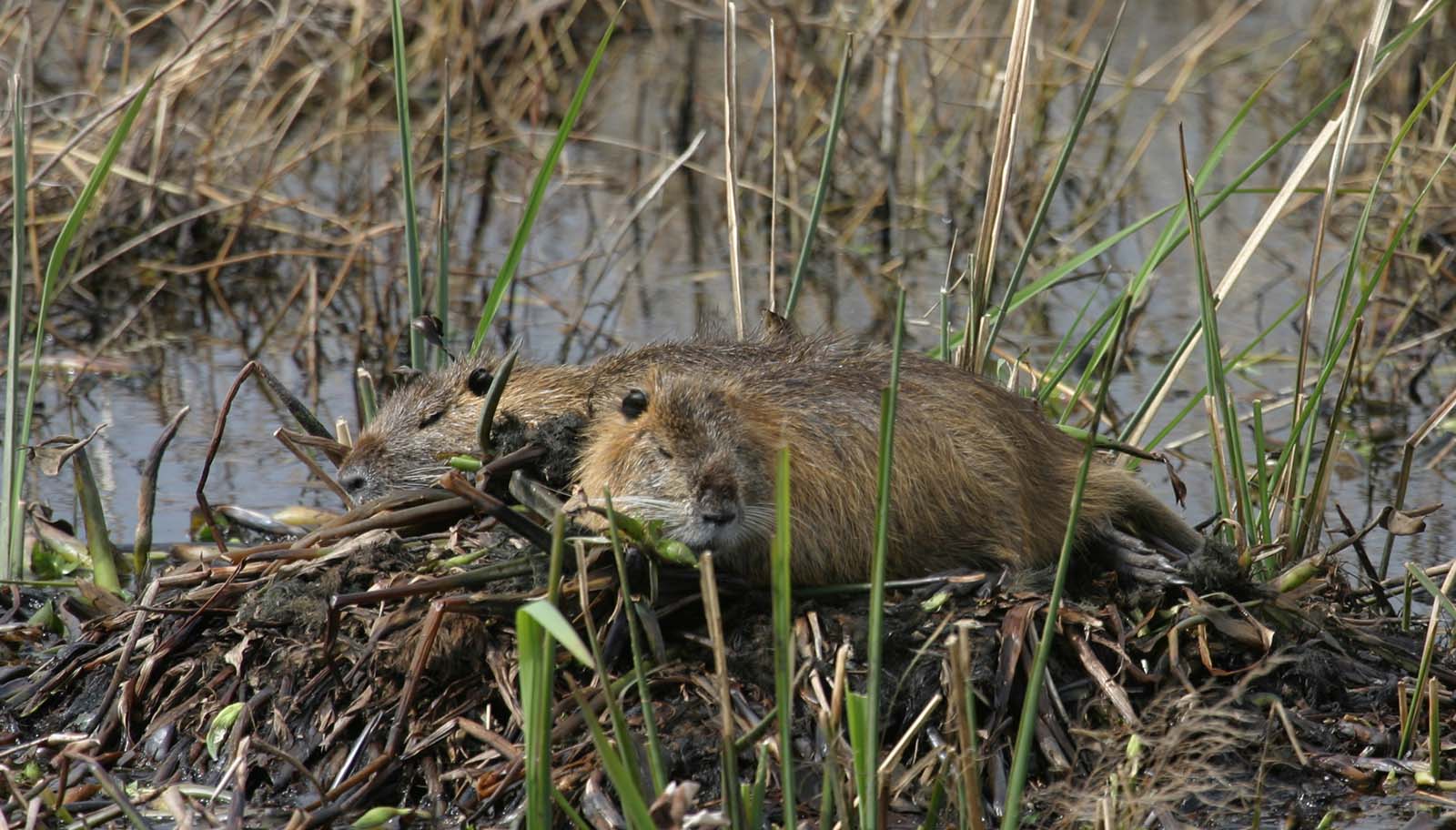
Nutria. Photo by USFWS.
As part of a multi-agency effort, DWR continues to monitor the distribution of nutria in Virginia. Although the current distribution of nutria in Virginia is not completely known, the majority of confirmed reports have been limited to areas east of Interstate 95 and south of the James River. Improving our understanding of where nutria occur is necessary to support potential eradication efforts.
If you believe you have seen a nutria in Virginia, please report your sighting.
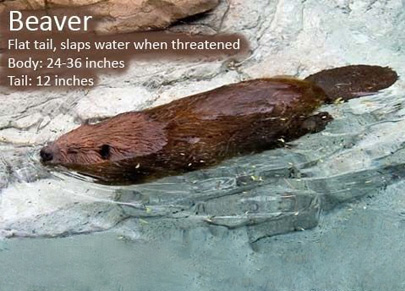
Nutria can look similar to muskrat and beaver. Notably, the nutria has a round, hairy tail that remains straight when swimming and prominent, white whiskers.
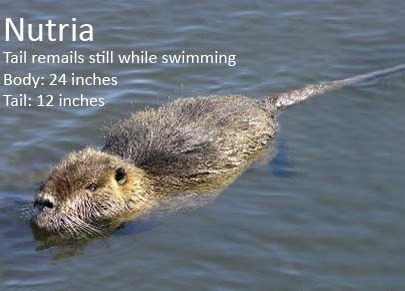
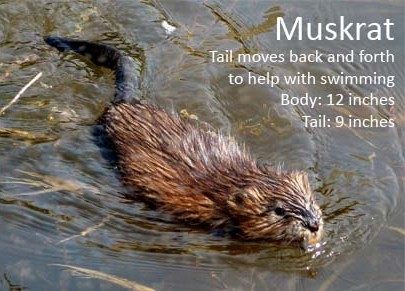
Nutria produce up to three litters each year of four to five young, a reproduction rate that left unmanaged can quickly lead to thousands upon thousands of individuals. They grow to between 15 and 30 pounds. Each nutria can consume up to 25 percent of their body weight in vegetation a day, and they feed year-round.
Read more about nutria and their effect on Virginia in the Virginia Wildlife article Menace of the Marsh. Nutria are not dangerous to humans, but they pose a significant threat to Virginia’s wetland ecosystems. Nutria can also cause property and crop damage with their extensive burrowing and feeding behaviors.
Private landowners, citizens, and conservation organizations can help protect our valuable wetlands in Virginia. You can assist by:
- Reporting any nutria you see. If possible, try to get a photograph of the animal before sending in the report.
- Educating your friends and neighbors about nutria and encourage them to also report sightings.
- There is a continuous open trapping and hunting season in Virginia.
- Nutria may not be possessed or moved
- You must contact the Commonwealth Attorney’s office in your county/city for information regarding legal methods of animal removal. Local ordinances are usually more restrictive than state laws.